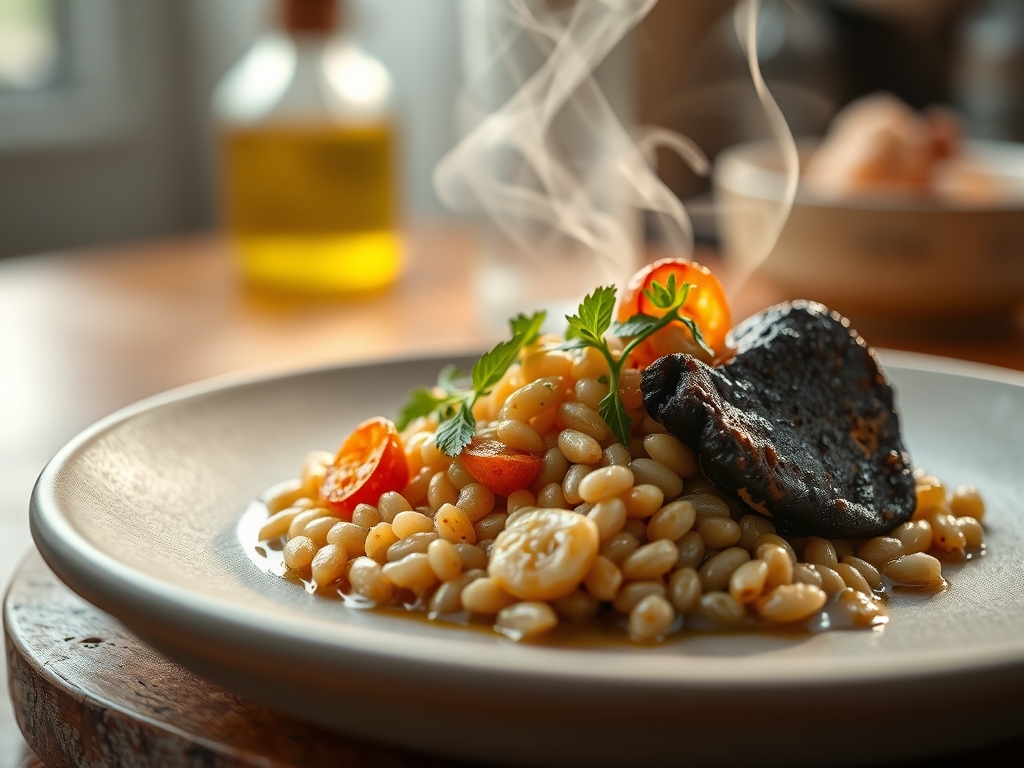
Forget everything you know about the humble porridge bowl. We are not here to discuss a mushy, beige afterthought relegated to the back of the pantry. We are here to talk about the structural integrity of the grain; the precise, architectural marvel that is the Pearl Barley Boil. When you execute this properly, you are not just cooking; you are performing a controlled hydration of a high-density carbohydrate matrix. The air should fill with a nutty, toasted aroma that borders on the primal. You are looking for that specific moment where the outer bran has been polished away, leaving a translucent, pearlescent orb that yields to the tooth with a distinct, springy resistance. This is the gold standard of soluble fiber infrastructure. We are targeting a specific viscosity where the starch release creates a self-emulsifying lacquer, coating every grain in a shimmering, savory sheen. If your barley feels like wet cardboard, you have failed the audit. If it stands tall, individual and proud, you have achieved culinary structural stability. Let us begin the technical breakdown.
THE DATA MATRIX
| Metric | Specification |
|---|---|
| Prep Time | 5 Minutes |
| Execution Time | 45-55 Minutes |
| Yield | 4-6 Servings |
| Complexity | 3/10 |
| Estimated Cost per Serving | $0.45 |
THE GATHERS
Ingredient Protocol:
- 200g / 1 cup Pearl Barley (Highest grade available)
- 750ml / 3 cups Filtered Water or Low-Sodium Chicken Stock
- 5g / 1 tsp Diamond Crystal Kosher Salt
- 15ml / 1 tbsp Extra Virgin Olive Oil or Unsalted Butter
- 1 Bay Leaf (Freshly dried)
- 2g / 0.5 tsp Black Peppercorns (Whole)
Section A: Ingredient Quality Audit:
The primary failure point in a Pearl Barley Boil is the age of the grain. If your barley has been sitting in a humid pantry for eighteen months, the lipids within the germ may have oxidized, leading to a bitter or "dusty" profile. To fix this, perform a sensory sniff test before hydration. If it smells like a cardboard box, discard it. Another common issue is "dusty" grain. If the barley arrives with a heavy coating of white powder, this is excess surface starch that will turn your pot into a gummy mess. The technical fix is a triple-rinse protocol in a fine-mesh sieve until the water runs crystal clear; this ensures the grains remain distinct rather than fusing into a singular mass. Finally, if using stock, ensure it is not over-salted. As the water evaporates, the salt concentration increases exponentially, which can toughen the outer cellulose layer of the grain and prevent proper core hydration.
THE MASTERCLASS
1. The Pre-Hydration Rinse and Scale
Place your dry grains into a stainless steel bowl sitting atop a digital scale to ensure precise ratios. Rinse the grains under cold, pressurized water, agitating them with your fingers to aerate and remove loose starch.
Pro Tip: Using a digital scale rather than volume cups accounts for the "settling" of the grain, ensuring your water-to-grain ratio is mathematically perfect every time. This prevents the dreaded "dry-pot" scenario where the bottom layer scorches before the core is tender.
2. The Saucier Sauté
Place a heavy-bottomed saucier over medium-high heat. Add your fat of choice. Once the fat begins to shimmer, add the drained barley. Toast the grains for 3 to 4 minutes, stirring constantly with a silicone spatula or bench scraper if working on a flat top, until they smell like popcorn.
Pro Tip: Toasting the grain initiates the Maillard reaction on the surface. This creates a hydrophobic barrier that slows down water absorption just enough to keep the center "al dente" while developing deep, nutty flavor compounds that raw boiling cannot achieve.
3. The Controlled Infusion
Pour in your measured liquid and add the aromatics. Bring the mixture to a hard boil for exactly sixty seconds to jumpstart the thermal core of the grain. Immediately drop the heat to the lowest possible setting.
Pro Tip: A hard initial boil ensures that the liquid penetrates the outer "pearl" layer quickly. However, you must quickly transition to a simmer to prevent the grains from exploding or "blooming" prematurely, which ruins the structural integrity.
4. The Low-Tension Simmer
Cover the pot with a tight-fitting lid. If your lid has a steam vent, cover it with a clean kitchen towel to trap all moisture. Let the Pearl Barley Boil proceed undisturbed for 40 minutes. Do not lift the lid; you are maintaining a pressurized micro-environment.
Pro Tip: Lifting the lid releases latent heat and steam, which drops the internal temperature of the pot. This causes the starch to cool and "set" prematurely, leading to a gritty, uneven texture. Trust the timing of your digital timer.
5. The Steam-Finish and Fluff
Remove the pot from the heat but keep the lid sealed. Let it rest for 10 minutes. Finally, use a fork or a wide-tined rake to gently lift and separate the grains.
Pro Tip: This resting phase allows the remaining moisture to redistribute evenly through the grain via capillary action. Using a fork instead of a spoon prevents you from mashing the softened grains, preserving the "individual bead" aesthetic shown in the reference photo.
Section B: Prep & Timing Fault-Lines:
The most common human error is the "boil-dry" catastrophe. If you notice a scorched smell before the timer ends, do not stir the pot. Stirring will distribute the carbonized, burnt flavor throughout the entire batch. Instead, immediately remove the pot from the heat and scoop out only the top, unburnt layer into a clean vessel. Another timing issue arises from altitude. If you are cooking above 3,000 feet, the boiling point of water is lower, meaning your Pearl Barley Boil will require an additional 15% to 20% more liquid and time to reach the same level of hydration.
THE VISUAL SPECTRUM
Section C: Thermal & Visual Troubleshooting:
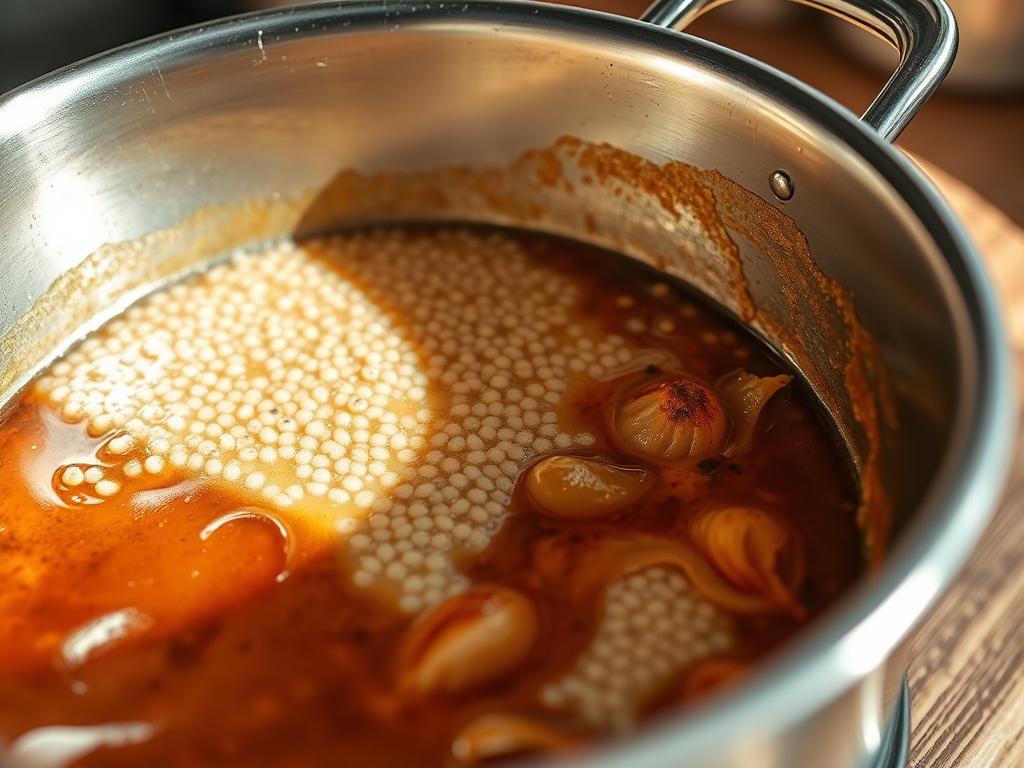
Look closely at the Masterclass photo. You should see a distinct "white eye" in the center of the grain, surrounded by a translucent, gelatinous halo. If your barley looks opaque and chalky white, it is undercooked; the starch has not yet gelatinized. If the grains look jagged or "exploded" like popcorn, you have over-boiled them at too high a temperature, causing the internal pressure to rupture the cell walls.
To achieve the shimmering finish seen in the image, you must infuse the grains with a final touch of fat (butter or oil) during the fluffing stage. This creates a light-reflective coating. If your barley looks dull or grey, it is likely due to using tap water with high mineral content. A splash of lemon juice at the end can brighten the pH and the visual "pop" of the dish.
THE DEEP DIVE
Macro Nutrition Profile:
Pearl barley is a complex carbohydrate powerhouse. A single cup of cooked barley provides approximately 190 calories, 6 grams of fiber (mostly beta-glucan), and 4 grams of protein. It has a low Glycemic Index (GI), meaning it provides sustained energy release without the insulin spikes associated with white rice or pasta.
Dietary Swaps:
- Vegan: Use high-quality vegetable stock and olive oil or avocado oil.
- Keto: Barley is not keto-friendly due to its high carb count; substitute with riced cauliflower (though the texture will not match).
- Gluten-Free: WARNING. Barley contains gluten. For a GF alternative with a similar "pop," use sorghum or whole-grain oat groats.
Meal Prep & Reheating Science:
Barley is the king of meal prep because its molecular structure is highly resistant to retrogradation (the process where starches turn hard and crystalline when cooled). To reheat, add 15ml of water per cup of barley and microwave covered. The steam will re-hydrate the starch matrix without making it mushy.
THE KITCHEN TABLE
Why is my barley still crunchy after 45 minutes?
Your water may be too alkaline, or your grains are ancient. Add a pinch of baking soda to the next batch to help break down the tough cellulose fibers, or simply extend the simmer time by 10 minutes.
Can I cook this in a pressure cooker?
Yes. Use a 1:2 grain-to-liquid ratio. Set to high pressure for 20 minutes with a natural release. This is faster but offers less control over the final "toasted" flavor profile developed in a saucier.
Should I soak the barley overnight?
Soaking is not strictly necessary for pearl barley since the outer hull is removed. However, a 2-hour soak can reduce cooking time by 30% and may improve digestibility for those with sensitive systems.
How do I make it more piquant?
After the boil, deglaze the pan with a splash of white wine or apple cider vinegar. The acidity cuts through the dense starch and elevates the earthy notes of the grain.