Listen closely because the difference between a culinary masterpiece and a soggy, starch-choked disaster lies in the physics of your pot. We are not just cooking dinner; we are managing a complex hydration project involving the structural integrity of semolina proteins. The humble Boiled Spaghetti is the ultimate litmus test for any kitchen infrastructure. It requires a violent, rolling turbulence to prevent the long-strand strands from fusing into a gelatinous mass. When that water hits a furious 212 degrees Fahrenheit, the starch granules begin to swell and eventually burst, creating a delicate equilibrium between the firm protein matrix and the softening carbohydrates. This is where the magic of al dente happens. It is a fleeting window of textural perfection that demands your absolute attention and a rigorous adherence to timing. If you miss the mark, you are not serving a meal; you are serving a failure of engineering. We are here to ensure your pasta achieves a structural resonance that sings on the palate, backed by the cold, hard science of thermal conduction.
THE DATA MATRIX
| Metric | Specification |
|---|---|
| Prep Time | 2 Minutes |
| Execution Time | 9 – 12 Minutes |
| Yield | 4 Servings |
| Complexity (1-10) | 3 |
| Estimated Cost per Serving | $0.85 |
THE GATHERS
Ingredient Protocol:
- 454g / 1 lb Dry Spaghetti (Bronze-die extruded preferred)
- 4L / 4.2 qt Filtered Water
- 40g / 2.5 tbsp Sea Salt (Fine grain for rapid dissolution)
- 15ml / 1 tbsp Extra Virgin Olive Oil (Optional, for finishing only)
Section A: Ingredient Quality Audit:
The primary failure point in Boiled Spaghetti is the quality of the wheat itself. Low-grade pasta often lacks the protein density required to maintain "bite," resulting in a mushy exterior before the core is even hydrated. If your pasta looks pale and smooth, it was likely extruded through Teflon, which lacks the micro-ridges needed to grip sauce. Technical Fix: Source pasta labeled "Pasta di Gragnano" or anything bronze-die cut. The rougher surface area increases the release of high-quality starch into the water, which you will later use to emulsify your sauce. If your water is excessively hard, the mineral content can interfere with starch gelatinization; consider using a filtered water source to ensure a neutral pH environment for the semolina.
THE MASTERCLASS
Step-by-Step Execution:
1. Thermal Priming and Salinity Calibration
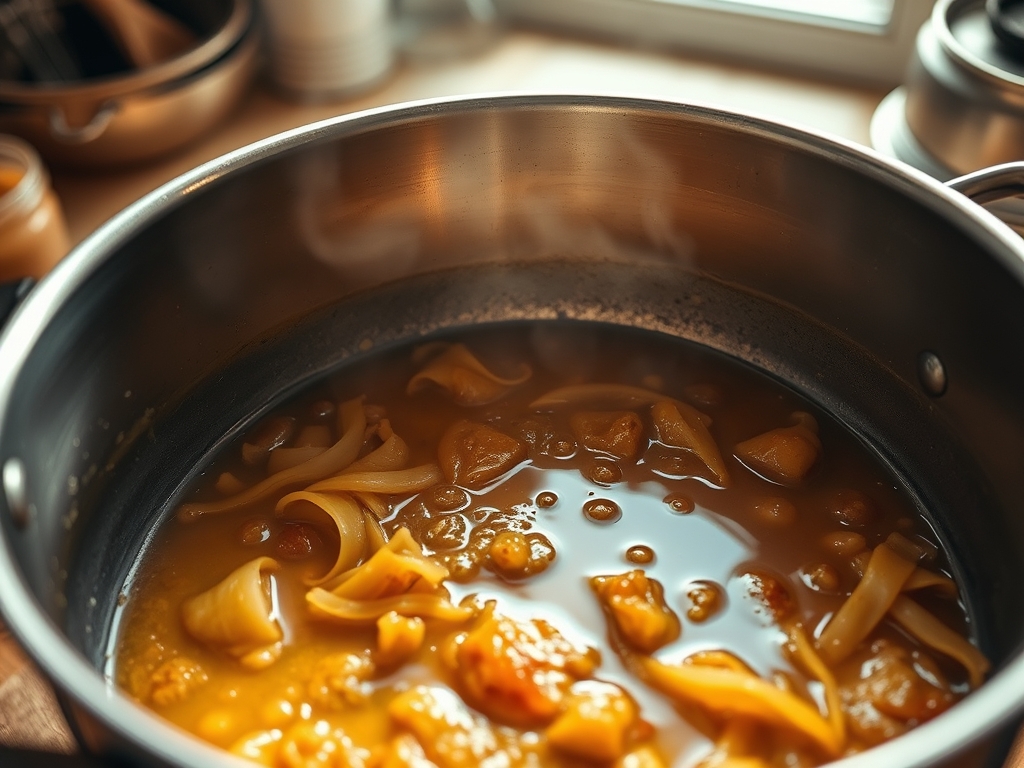
Fill a large saucier or stockpot with your filtered water. Place it over high heat and bring it to a violent, aggressive boil. Do not add the salt until the water has reached its peak temperature. Adding salt too early can slightly delay the boiling point and lead to pitting in stainless steel cookware. Use a digital scale to ensure your salinity reaches roughly 1 percent; this is the only chance you have to season the pasta from the inside out.
Pro Tip: The science of osmosis dictates that salt moves from areas of high concentration to low. By salting the water heavily, you force the sodium ions into the wheat matrix as it expands, ensuring the final product is not bland at its core.
2. The Strand Deployment
Introduce the spaghetti to the center of the vortex. Do not break the strands. Use a bench scraper or a long-handled fork to gently nudge the submerged ends until the entire length is underwater. Immediately stir for the first 60 seconds. This is the critical window where surface starches are most viscous and likely to bond strands together.
Pro Tip: Agitation is your best friend. By keeping the strands in motion during the initial starch release, you prevent the formation of "clump clusters" that ruin the uniform texture of the Boiled Spaghetti.
3. Monitoring the Hydration Curve
Set your timer for two minutes less than the package instructions. You are looking for the "white dot" stage. Remove a single strand with tongs and bite into it. You should see a tiny, pin-sized speck of unhydrated flour in the center. This indicates the pasta is ready to be finished in a pan with sauce, where it will absorb the piquant flavors of your condiment without overcooking.
Pro Tip: Professional kitchens never cook pasta 100 percent of the way in water. The "carry-over" cooking that occurs during the saucing phase is what ensures the final dish maintains its structural tension.
4. The Starch Gold Extraction
Before draining, use a measuring cup to rescue 250ml of the cloudy pasta water. This liquid is liquid gold; it is a saturated solution of amylose and amylopectin. Drain the rest of the pasta through a stainless steel colander. Do not rinse the pasta with cold water unless you are making a cold salad. Rinsing strips away the starch that allows the sauce to cling to the noodle.
Pro Tip: This reserved water acts as a natural emulsifier. When combined with fats like butter or oil in a pan, the starches bridge the gap between water and fat, creating a glossy, restaurant-quality coating.
Section B: Prep & Timing Fault-Lines:
The most common human error is the "Cold Pot Syndrome." If you add pasta to water that is merely simmering, the starch leaks out slowly, creating a gummy exterior. Ensure the water is at a "rolling boil" that does not stop when the pasta is added. If your stove lacks the BTUs to maintain this heat, cook in smaller batches. Another timing fault is the "Drain Delay." Leaving pasta in the hot colander for even 60 seconds without fat or sauce will cause the strands to fuse. You must move with clinical efficiency the moment the timer hits zero.
THE VISUAL SPECTRUM
Section C: Thermal & Visual Troubleshooting:
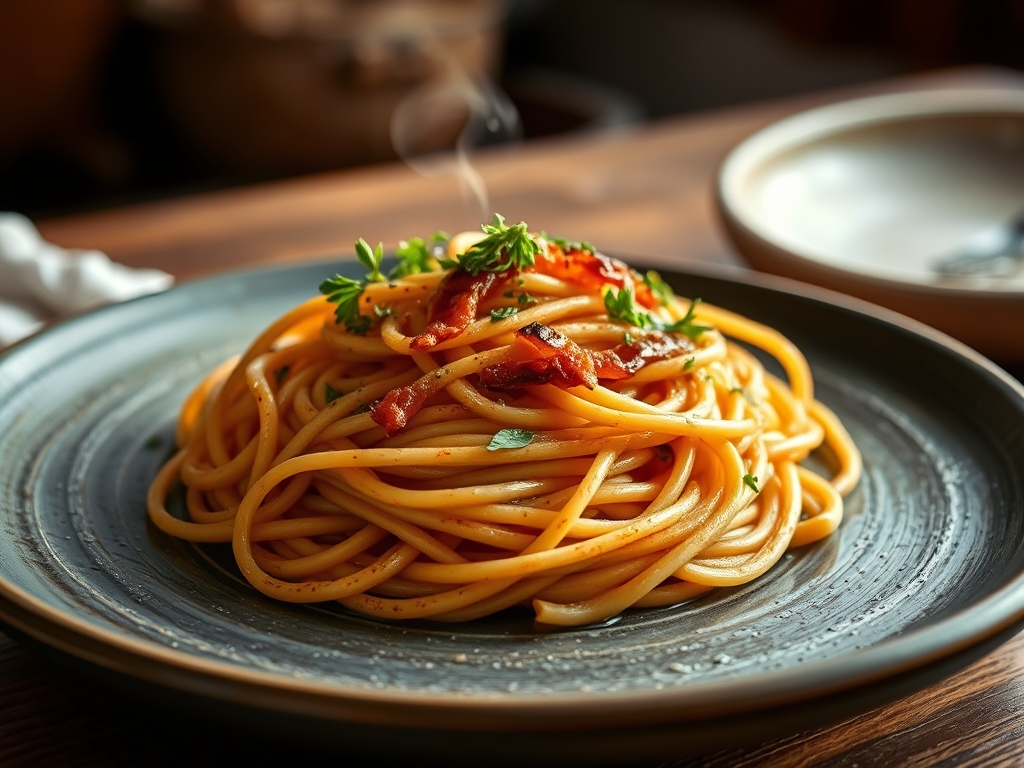
Referencing the Masterclass photo, your Boiled Spaghetti should exhibit a vibrant, golden-yellow hue with a slight matte finish. If the pasta appears translucent or grey, it has been over-hydrated and the protein structure has collapsed. If the strands look "shaggy" or have white patches, they were likely crowded in a pot that was too small, preventing even thermal distribution. To fix uneven browning or dullness in the final plated dish, ensure you are not using "enriched" pastas that contain excessive riboflavin, which can create an artificial neon tint. A perfect strand should have a slight "spring" or "rebound" when pulled; if it stretches like a rubber band and stays elongated, the gluten network has been compromised by overcooking.
THE DEEP DIVE
Macro Nutrition Profile:
A standard 2oz (56g) dry serving of Boiled Spaghetti provides approximately 200 calories, 7g of protein, and 42g of carbohydrates. It is a low-fat fuel source that provides sustained energy release due to its complex carbohydrate structure.
Dietary Swaps:
- Vegan: Standard dried spaghetti is naturally vegan; ensure no "egg pasta" variants are used.
- Keto: Substitute with shirataki noodles or spiralized zucchini (zoodles), though these require zero boiling time and should be flash-sautéed to prevent water release.
- GF: Use brown rice or quinoa-based pasta. Note that GF pasta releases significantly more starch; increase your water-to-pasta ratio by 20 percent to prevent a sludge-like consistency.
Meal Prep & Reheating Science:
To maintain molecular structure for later use, undercook the pasta by 3 minutes. Shock in an ice bath to stop the cooking process, then toss with a neutral oil to prevent oxidation and sticking. When reheating, use steam rather than the microwave. Steaming re-hydrates the starch granules without vibrating the water molecules so violently that the strands disintegrate.
THE KITCHEN TABLE
Why does my pasta water foam up and boil over?
This is caused by starch molecules creating a "skin" on the surface that traps steam. To prevent this, use a larger pot or add a tiny drop of oil to break the surface tension of the bubbles.
Should I add oil to the boiling water?
No. Oil floats on top and does nothing to prevent sticking during the boil. Worse, it coats the pasta as you drain it, preventing your sauce from adhering. Save the oil for the final plating.
How much salt is too much?
The water should taste "like the sea." While 1 percent salinity is the standard, you can go up to 2 percent if you are not using a salty sauce like Pecorino-heavy carbonara.
Can I cook spaghetti in a shallow pan?
Technically yes, but it requires constant agitation to prevent sticking. A deep pot is the superior infrastructure for ensuring the strands have enough room to aerate and move freely in the current.