If you are staring at a watery, lackluster gravy and calling it sauce, we need to have a serious intervention regarding your culinary infrastructure. We are not here to play with cornstarch slurries or instant bouillon cubes. We are here to master the Demi Glace Reduction; the literal tectonic plate upon which French haute cuisine rests. This is a high stakes game of moisture management and collagen transformation. You are essentially taking a massive volume of aromatic liquid and bullying it into a state of syrupy, mirror like perfection. When done correctly, the result is so viscous it should coat the back of a spoon like liquid velvet and possess a piquant depth that triggers a primal umami response. We are looking for a structural masterpiece of gelatin and Maillard reaction products. If your sauce does not have the reflective properties of a polished obsidian gemstone, you have failed the audit. Prepare your station; we are about to re-engineer your flavor profile from the bone up.
THE DATA MATRIX
| Metric | Specification |
|---|---|
| Prep Time | 45 Minutes |
| Execution Time | 12 – 24 Hours |
| Yield | 500ml / 2 Cups |
| Complexity (1-10) | 9 |
| Estimated Cost per Serving | $4.50 |
THE GATHERS
Ingredient Protocol:
- Beef Marrow Bones (Roasted): 2.25kg / 5 lbs
- Veal Knuckle Bones: 1.35kg / 3 lbs
- Mirepoix (Onion, Carrot, Celery): 450g / 1 lb
- Tomato Paste: 60ml / 4 tbsp
- Red Wine (Dry Cabernet): 750ml / 1 bottle
- Cold Filtered Water: 8L / 2.1 gallons
- Bouquet Garni (Thyme, Bay, Parsley): 1 bundle
- Black Peppercorns: 5g / 1 tsp
Section A: Ingredient Quality Audit:
The primary failure point in a Demi Glace Reduction is the source material. If your bones are bleached white and devoid of connective tissue, your viscosity will be non-existent. You need knuckle bones for their high collagen content. If you find yourself with "clean" bones, the technical fix is to supplement with a high quality unflavored gelatin or a pig's trotter to ensure the protein lattice forms correctly. Furthermore, avoid "cooking wine" containing salt. The reduction process concentrates salinity exponentially; using salted wine will result in a sodium bomb that is chemically inedible. Use a wine you would actually drink.
THE MASTERCLASS
1. The Maillard Incineration
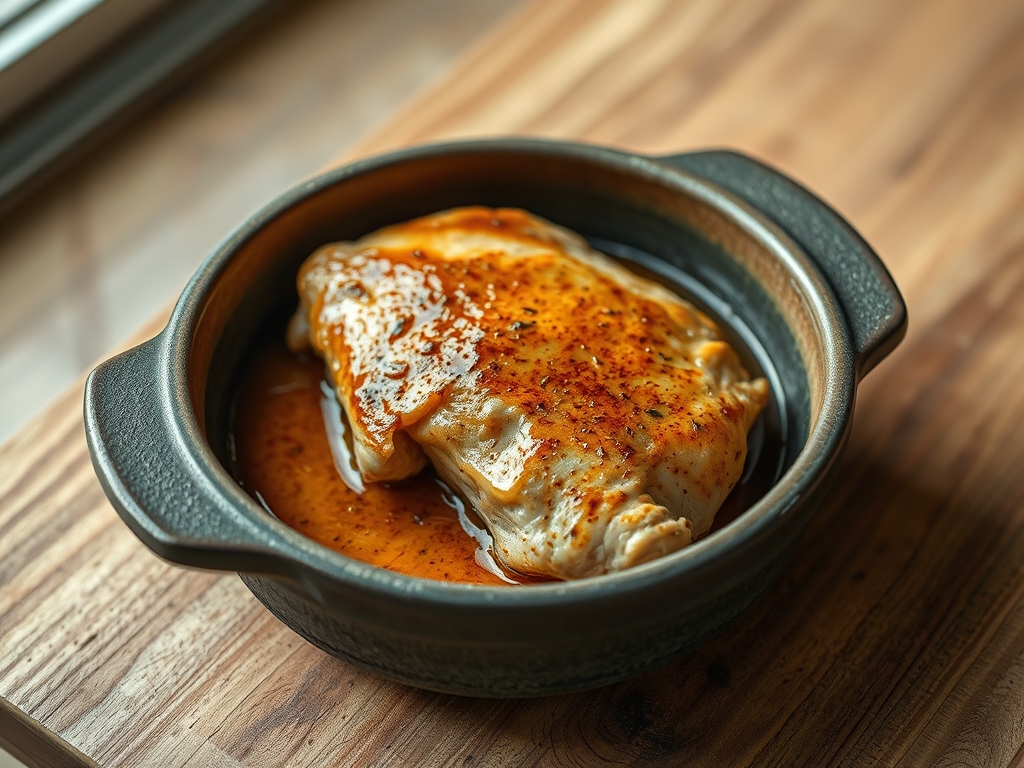
Roast your bones at 230C (450F) until they are deep mahogany. Do not stop at golden brown. You are looking for the chemical breakdown of amino acids and sugars to create complex flavor compounds. Use a heavy duty roasting pan to prevent warping under high heat.
Pro Tip: The science here is the Maillard reaction. Using a digital scale to ensure your mirepoix ratio is exactly 2:1:1 (Onion:Carrot:Celery) ensures the natural sugars caramelize at the same rate as the bone proteins.
2. The Pincé Maneuver
Add your tomato paste to the roasting pan during the last twenty minutes of bone roasting. This process, known as "pincé," toasts the paste to remove its raw metallic acidity and develop a brick red hue.
Pro Tip: Use a bench scraper to move the vegetables and paste around, ensuring no localized scorching occurs, which would introduce a bitter carbon note to the final reduction.
3. The Deglaze Protocol
Transfer bones and vegetables to a large stockpot. Place the roasting pan over a burner and add the red wine. Use a whisk to scrape up every brown bit (the fond). This is where the concentrated flavor lives.
Pro Tip: This step is about solvent extraction. The alcohol and acidity in the wine act as a solvent to dissolve the hardened proteins that a saucier would otherwise lose in the wash.
4. The Long Simmer
Cover the bones with cold water and bring to a bare simmer. Do not boil. Boiling will emulsify the fat into the liquid, creating a cloudy, greasy mess instead of a clear glaze. Skim the "scum" or denatured proteins every thirty minutes.
Pro Tip: Using a conical strainer (Chinois) during the later stages is vital. The cold water start allows for a slow release of soluble proteins, ensuring maximum clarity in the finished Demi Glace Reduction.
5. The Final Reduction
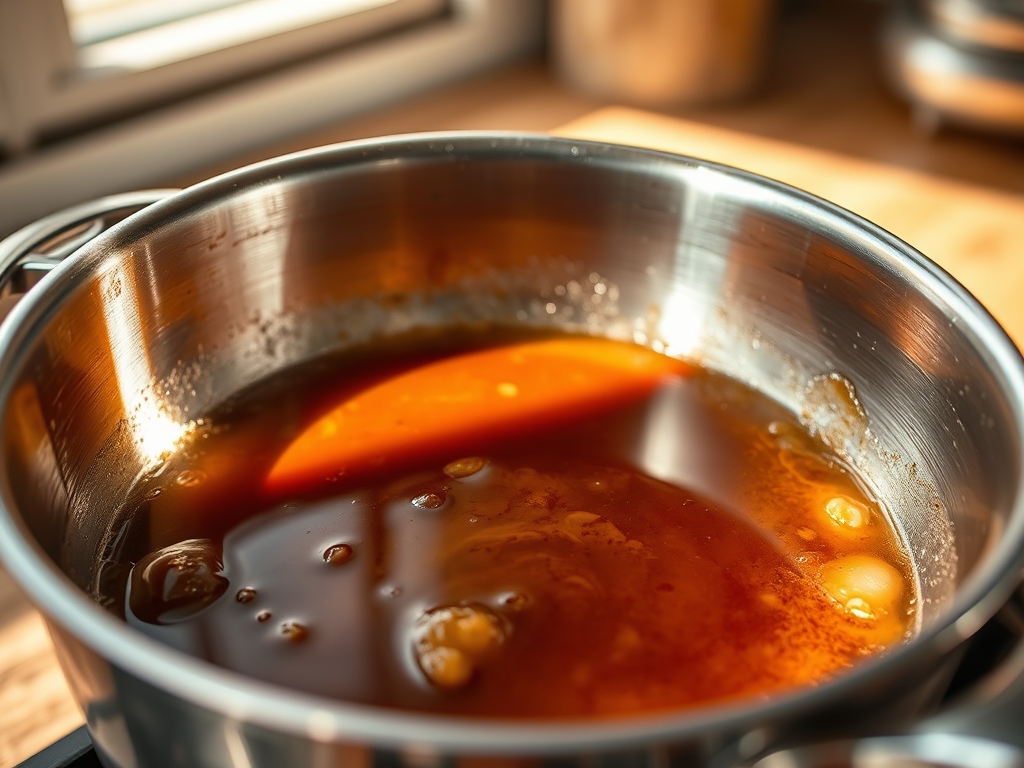
After straining the solids, return the liquid to a clean pot. Reduce the volume by half, then half again, until it reaches a coating consistency (nappé). It should be thick, glossy, and intensely savory.
Pro Tip: Switch to a saucier with sloped sides for this stage. The increased surface area accelerates evaporation while the rounded bottom prevents the sauce from scorching in the corners.
Section B: Prep & Timing Fault-Lines:
The most common human error is impatience. If you increase the heat to "speed up" the reduction, you risk burning the sugars at the edges of the pot. This creates a "ring" of bitterness that will permeate the entire batch. If you see a dark ring forming, immediately transfer the liquid to a smaller, clean vessel without scraping the sides. Another timing fault is adding the bouquet garni too early. Extended boiling of herbs leads to the extraction of tannins and woody notes; add them only in the final four hours of the initial stock phase.
THE VISUAL SPECTRUM
Section C: Thermal & Visual Troubleshooting:
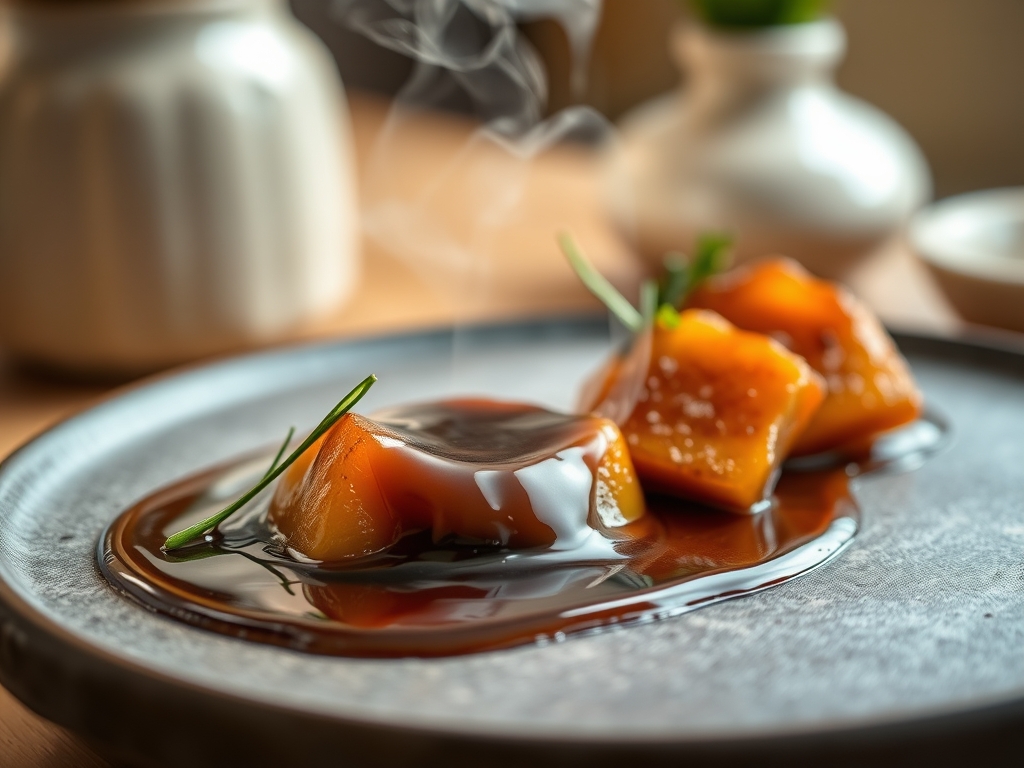
Look at the Masterclass photo above. Notice the "mirror finish" on the surface of the sauce. If your reduction looks dull or matte, your fat removal was insufficient. You can fix this by chilling the sauce until the fat solidifies on top, then removing the disc. If the color is pale rather than deep chocolate, your initial roast was too timid. You can technically "cheat" the color with a drop of kitchen bouquet, but the flavor depth will never match a true Maillard roast. If you see "floaties" or cloudiness, you likely boiled the stock. Pass the liquid through a coffee filter or a triple layered cheesecloth to restore the crystalline structure.
THE DEEP DIVE
Macro Nutrition Profile:
A standard 60ml serving of Demi Glace Reduction contains approximately 45 calories, 0g fat (if properly skimmed), 4g protein (mostly collagen), and 2g carbohydrates. It is a micronutrient powerhouse of minerals leached from the bone marrow.
Dietary Swaps:
- Vegan: Utilize a "Demi-Glace" made from roasted mushrooms, kombu, and soy sauce to mimic the umami and glutamates. Use agar-agar for viscosity.
- Keto/GF: This recipe is naturally Keto and Gluten Free as it relies on protein reduction rather than flour based thickeners like roux.
Meal Prep & Reheating Science:
Demi glace is a structural marvel. It freezes perfectly in silicone ice cube trays for up to six months. To reheat, do not microwave. Microwaves vibrate water molecules unevenly, which can break the delicate protein emulsion. Reheat slowly in a small pan over low heat, adding a teaspoon of water or wine to "loosen" the molecular bonds as it returns to a liquid state.
THE KITCHEN TABLE
How long does demi-glace last in the fridge?
Due to the high gelatin and salt concentration, it stays stable for 1 to 2 weeks. For longer storage, freeze it. Always ensure it is stored in an airtight container to prevent it from absorbing refrigerator odors.
Can I use chicken bones instead of beef?
Technically, that results in a "Glace de Volaille." It will be lighter in color and flavor. Beef and veal bones are preferred for the traditional Demi Glace Reduction because of their superior collagen density and deeper flavor profile.
Why is my sauce bitter?
Bitterness usually stems from two sources: scorched tomato paste or burnt vegetables. If the "fond" in your roasting pan turns black instead of deep brown, discard it. You cannot fix carbonized bitterness; you can only prevent it.
What is the "Nappé" test?
Dip a metal spoon into your reduction. Draw your finger across the back. If the line remains sharp and the sauce does not run into the cleared path, you have achieved the perfect viscosity for a professional Demi Glace Reduction.