The scent of a failing kitchen is often the sharp, stinging odor of raw ethanol; the scent of a professional kitchen is the deep, dark, and syrupy promise of a perfect Red Wine Reduction. You are not just boiling grape juice. You are conducting a high-stakes thermal audit on a complex solution of anthocyanins, tannins, and organic acids. When that bottle of Cabernet hits the hot stainless steel, you are initiating a violent phase change. The goal is simple yet ruthless: drive off the volatile alcohol molecules while retaining the soul of the fruit. As the liquid level drops, the viscosity climbs. You are looking for that specific moment of nappe consistency, where the sauce coats the back of a spoon like liquid velvet. If you pull it too early, you have a thin, acidic mess. If you wait too long, you have a bitter, scorched resin. This is where we separate the line cooks from the executive chefs. We are here to master the concentration of flavor through controlled evaporation.
THE DATA MATRIX
| Metric | Specification |
|---|---|
| Prep Time | 10 Minutes |
| Execution Time | 35-45 Minutes |
| Yield | 125ml / 0.5 Cup |
| Complexity (1-10) | 6 |
| Estimated Cost per Serving | $1.50 – $2.50 |
THE GATHERS
Ingredient Protocol:
- 750ml / 1 Bottle Dry Red Wine (Cabernet Sauvignon or Syrah preferred)
- 500ml / 2 Cups High-Gelatin Beef or Veal Stock
- 60g / 4 tbsp Cold Unsalted Butter (Cubed)
- 45g / 3 tbsp Minced Shallots
- 2g / 1 tsp Black Peppercorns (Cracked)
- 1 Sprig Fresh Thyme
- 10ml / 2 tsp Balsamic Vinegar (For acidity correction)
Section A: Ingredient Quality Audit:
The most common failure point in a Red Wine Reduction is the use of "cooking wine" or sub-par, high-tannin bottles that have turned to vinegar. If your base wine tastes like a penny, your reduction will taste like a copper pipe. Technical Fix: If the wine is overly acidic, do not add sugar immediately. Instead, use a pinch of baking soda to neutralize excess acetic acid, or wait to balance the final product with cold butter. If your stock lacks body, it means the collagen hasn't been properly extracted. You can salvage this by whisking in a small amount of unflavored gelatin bloomed in cold water before you begin the reduction process. This ensures the viscous mouthfeel required for a premium glaze.
THE MASTERCLASS
1. The Aromatics Infusion
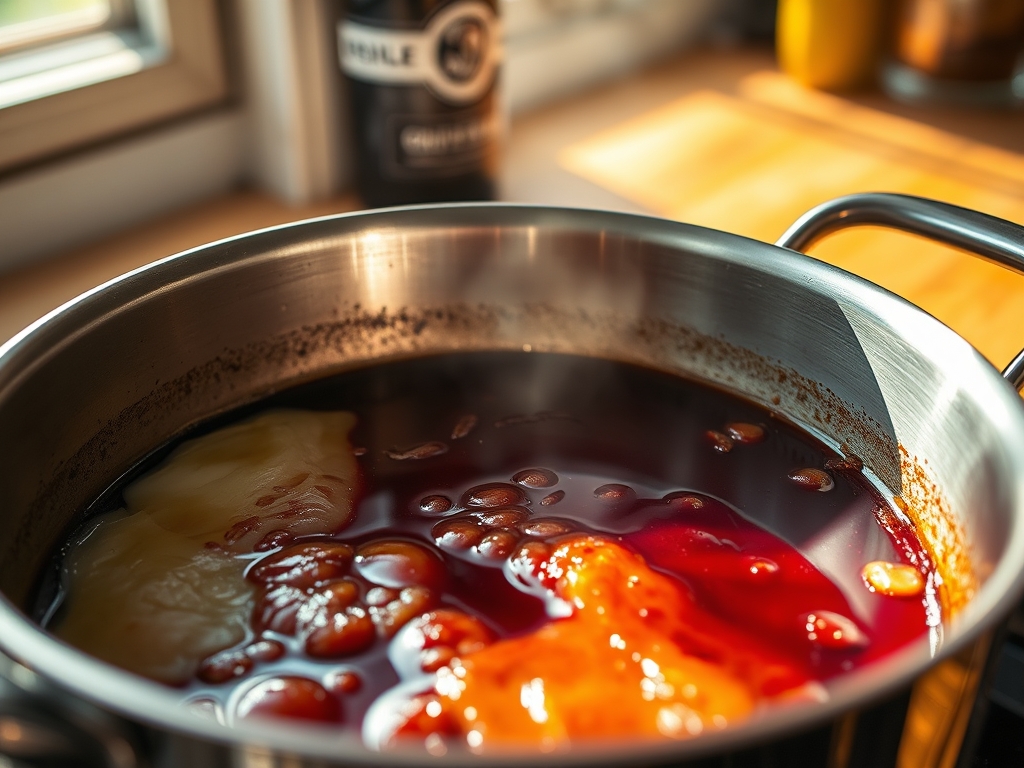
Place your saucier over medium heat and add a small knob of butter. Sauté the minced shallots until translucent but not browned. Add the cracked peppercorns and thyme. This step is about building the foundation of the flavor profile.
Pro Tip: Use a saucier rather than a straight-sided saucepan. The curved bottom prevents "dead zones" where shallots can scorch; it also facilitates more efficient whisking during the final emulsification phase.
2. The Primary Deglaze
Pour the entire bottle of wine into the pan. Increase the heat to medium-high to bring the liquid to a steady simmer. You want to see active bubbling but not a violent rolling boil that could emulsify impurities back into the liquid.
Pro Tip: Use a bench scraper to ensure no shallot bits are stuck to the dry sides of the pan. As the wine reduces, it leaves a "tide line" of sugars that can burn; keep the sides clean to maintain a piquant, clean flavor.
3. The Ethanol Evaporation Phase
Reduce the wine by half. This is the critical stage where the harsh alcohol notes vanish and the fruit sugars begin to concentrate. This is not a race. Rapid boiling can break down the delicate esters that provide the wine's unique bouquet.
Pro Tip: Monitor the volume using a digital scale if you are unsure. A standard 750ml bottle should weigh roughly 375g once it has reached the 50 percent reduction mark.
4. The Stock Integration
Add the beef or veal stock to the wine. Continue to simmer until the total volume is reduced by another 50 to 60 percent. The sauce should now begin to look glossy and dark.
Pro Tip: High-quality stock contains natural gelatin. As water evaporates, these protein strands tangle together, creating the "body" of the sauce. If the sauce looks thin, continue the render process until it clings to your whisk.
5. The Cold Butter Emulsification (Monte au Beurre)
Remove the pan from the heat. Whisk in the cold, cubed butter one piece at a time. This creates a stable emulsion that gives the sauce its signature sheen and mellows the intense tannins.
Pro Tip: Temperature control is vital here. If the sauce is too hot, the butter will "break," and you will see pools of yellow oil on the surface. If this happens, add a teaspoon of cold water and whisk vigorously to re-emulsify the fats.
Section B: Prep & Timing Fault-Lines:
The biggest human error is walking away from the stove. The rate of evaporation increases as the volume decreases. In the final five minutes, the sauce can go from perfect to burnt in sixty seconds. Technical Fix: If you over-reduce and the sauce becomes tacky or "tacky-thick," whisk in a tablespoon of warm stock or water immediately to let it aerate and loosen. Always use a timer for the initial 20 minutes, but use your eyes and a spoon for the final 10.
THE VISUAL SPECTRUM
Section C: Thermal & Visual Troubleshooting:
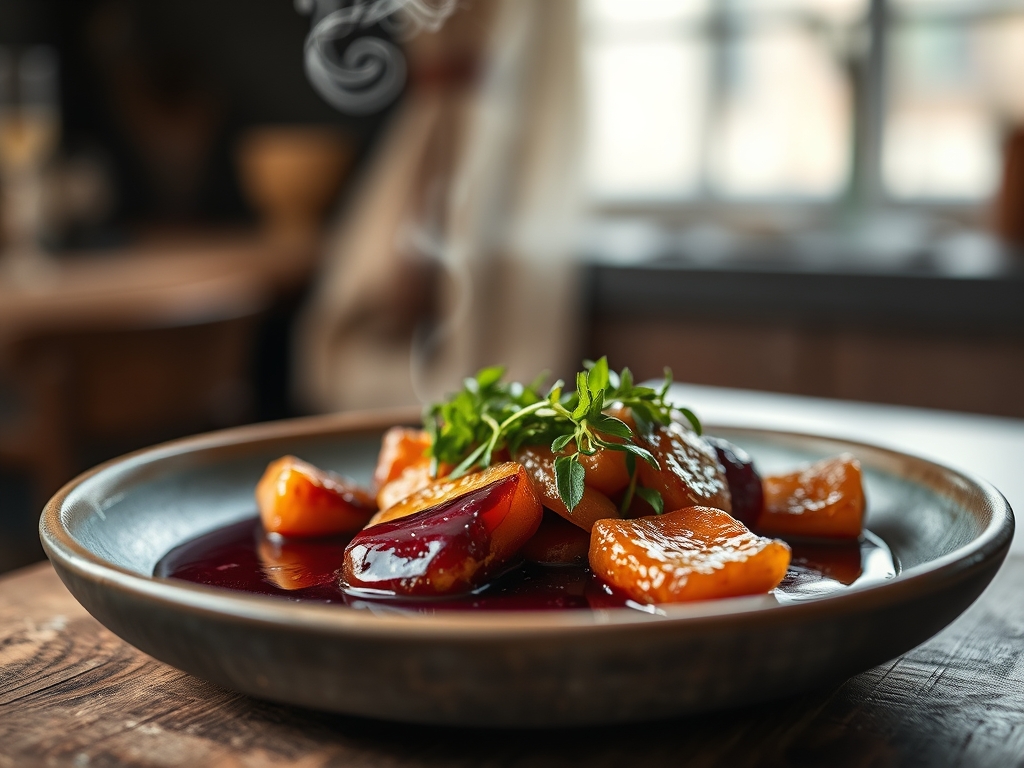
Look at the Masterclass photo above. Notice the deep, mahogany hue and the way the light reflects off the surface. If your sauce looks dull or grey, you likely used a low-collagen stock or failed to strain the aromatics. Technical Fix: Pass the finished sauce through a chinois or fine-mesh strainer to remove shallots and peppercorns. This ensures a glass-like finish. If the color is too light, you may have incorporated too much air while whisking; let the sauce sit for a minute to settle. If you see "breaking" (oil droplets), your temperature during the butter stage was too high. Correct this by whisking in a splash of room-temperature wine to bridge the fat and water molecules.
THE DEEP DIVE
Macro Nutrition Profile
A standard 30ml serving of Red Wine Reduction contains approximately 85 calories. The bulk of these calories come from the butter (fats) and the concentrated sugars in the wine. While the alcohol is mostly evaporated, the caloric density remains high due to the volume reduction. It is naturally low in sodium if you use a low-sodium home-made stock.
Dietary Swaps
- Vegan: Replace the beef stock with a roasted mushroom and seaweed broth to maintain umami. Substitute the butter with a high-quality vegan buttery spread or a touch of emulsified olive oil.
- Keto: This sauce is naturally keto-friendly, provided no flour or cornstarch is used as a thickener.
- GF: Naturally gluten-free as long as the stock is made from scratch without grain-based additives.
Meal Prep & Reheating Science
To maintain the molecular structure, do not microwave this sauce. Rapid, uneven heating will break the butter emulsion. Instead, reheat gently in a small pan over low heat, adding a teaspoon of water to restore the moisture lost during storage. The sauce can be frozen in ice cube trays for up to three months without losing its structural integrity.
THE KITCHEN TABLE
Why is my reduction bitter?
Bitter notes usually stem from over-reducing a high-tannin wine or scorching the shallots. To fix this, whisk in a tiny pinch of sugar or a splash of balsamic vinegar to balance the palate.
Can I use white wine instead?
Yes, but it is a different beast entirely. A white wine reduction (Beurre Blanc base) focuses on acidity and bright citrus notes rather than the deep, earthy tannins found in red wine.
What is the best wine for this?
Avoid expensive bottles with heavy oak. Look for "fruit-forward" reds like Malbec, Merlot, or a basic Cotes du Rhone. The heat will destroy the subtle nuances of a $100 bottle anyway.
How do I know it is done?
The "Spoon Test" is king. Dip a spoon into the sauce and draw your finger across the back. If the line stays clean and the sauce doesn't run, you have achieved the perfect concentration.