Listen up, kitchen operatives. We are entering the high-stakes theater of tuber detoxification. This is not your grandmother's potato salad; this is a mission-critical extraction of Manihot esculenta. We are dealing with a root that carries a chemical payload of linamarin and lotaustralin. These are cyanogenic glycosides that require precise thermal intervention to neutralize. If you botch the execution, you are not just serving a side dish; you are failing a basic safety audit. But when you master the Boiled Cassava Data, you unlock a starchy marvel that is buttery, dense, and structurally superior to any russet on the market. We are looking for that perfect transition from woody exterior to a translucent, fork-tender interior that shatters with a waxy, luxurious mouthfeel. This is about managing the cellular architecture of the root. We are going to hydrate those starch granules until they reach peak gelatinization, stripping away the bitter toxins and leaving behind a pure, ivory canvas of energy. Let's get the sensors calibrated and the burners primed.
THE DATA MATRIX
| Metric | Specification |
|---|---|
| Prep Time | 15 Minutes |
| Execution Time | 30 Minutes |
| Yield | 4 Servings |
| Complexity (1-10) | 4 |
| Estimated Cost per Serving | $1.25 |
THE GATHERS
Ingredient Protocol:
- 1 kg / 2.2 lbs Fresh Yuca (Cassava) Root
- 2 Liters / 8.5 cups Filtered Water
- 15g / 1 tbsp Sea Salt (Fine Grain)
- 2 Garlic Cloves (Smashed)
- 30ml / 2 tbsp Extra Virgin Olive Oil
- 5ml / 1 tsp Fresh Lime Juice
Section A: Ingredient Quality Audit:
The primary failure point in cassava infrastructure is the "Blue Vascular Streak." If you slice into your root and see black or blue veins spider-webbing through the white flesh, you have a post-harvest physiological deterioration. This is non-negotiable; discard those sections immediately as they indicate fermentation and off-flavors. If the root feels soft or "bouncy" rather than rock-solid, the starch has already begun to convert to sugars, ruining the structural integrity. To fix sub-par, slightly dry roots, perform a long-form soak in cold water for 20 minutes prior to boiling to rehydrate the cellular walls.
THE MASTERCLASS
1. The Perimeter Breach: Peeling and Sectioning
Use a heavy-duty chef's knife or a bench scraper to stabilize the root on your station. Cut the yuca into 3-inch cylinders. Score the thick, bark-like skin vertically. Use your thumb or a dull knife to pry the skin away from the flesh. You must remove both the brown outer bark and the pinkish-white inner layer to reveal the pure white core.
Pro Tip: The skin of the cassava contains the highest concentration of toxins. By using a digital scale to ensure uniform weight across your sections, you guarantee that the thermal energy penetrates every piece at the exact same rate, preventing a mix of mushy and raw centers.
2. Hydration and Toxin Displacement
Place the cleaned sections into a heavy-bottomed saucier or stockpot. Cover with cold filtered water, ensuring at least two inches of clearance above the roots. Add your salt and smashed garlic. Bring the vessel to a hard boil over high heat.
Pro Tip: Starting with cold water allows the starch granules to swell gradually. If you drop yuca into boiling water, the exterior "shocks" and seals, which can trap cyanogenic compounds inside the core rather than allowing them to leach out into the discarded water.
3. The Simmer Phase and Core Extraction
Once the boil is achieved, reduce the heat to a steady simmer. Cover the pot partially. Monitor the roots for 20 to 30 minutes. You are looking for the "Bloom," where the ends of the cylinders begin to flare out and the color shifts from opaque white to a slightly translucent yellow.
Pro Tip: Use a thermometer or a cake tester to check resistance. The tool should slide through the center like room-temperature butter. If you feel a "snap" in the middle, the woody central vein is still holding the structure together; give it five more minutes.
4. The Final Refinement: Deglazing and Infusing
Drain the water immediately. While the yuca is steaming hot, use a pair of tongs to pull out the woody fibrous cord from the center of each piece. Toss the warm roots with olive oil and lime juice to infuse the exterior with lipids, which prevents the starch from retrograding into a rubbery texture.
Pro Tip: This is where you can render some aromatics in a separate pan to pour over the top. The acidity of the lime juice acts as a chemical brightener, cutting through the heavy starch density and providing a piquant finish that elevates the earthy base notes.
Section B: Prep & Timing Fault-Lines:
The most common human error is the "Starch Stall." This happens when the water temperature fluctuates too wildly. If you add cold water mid-boil to top off the pot, you reset the gelatinization timer, often resulting in a "glassy" texture that never softens. Always use a kettle to add pre-heated water if the level drops. Furthermore, over-boiling will cause the exterior to aerate and disintegrate into the water before the interior is safe to consume. Precision timing is the only defense against a "yuca mush" catastrophe.
THE VISUAL SPECTRUM
Section C: Thermal & Visual Troubleshooting:
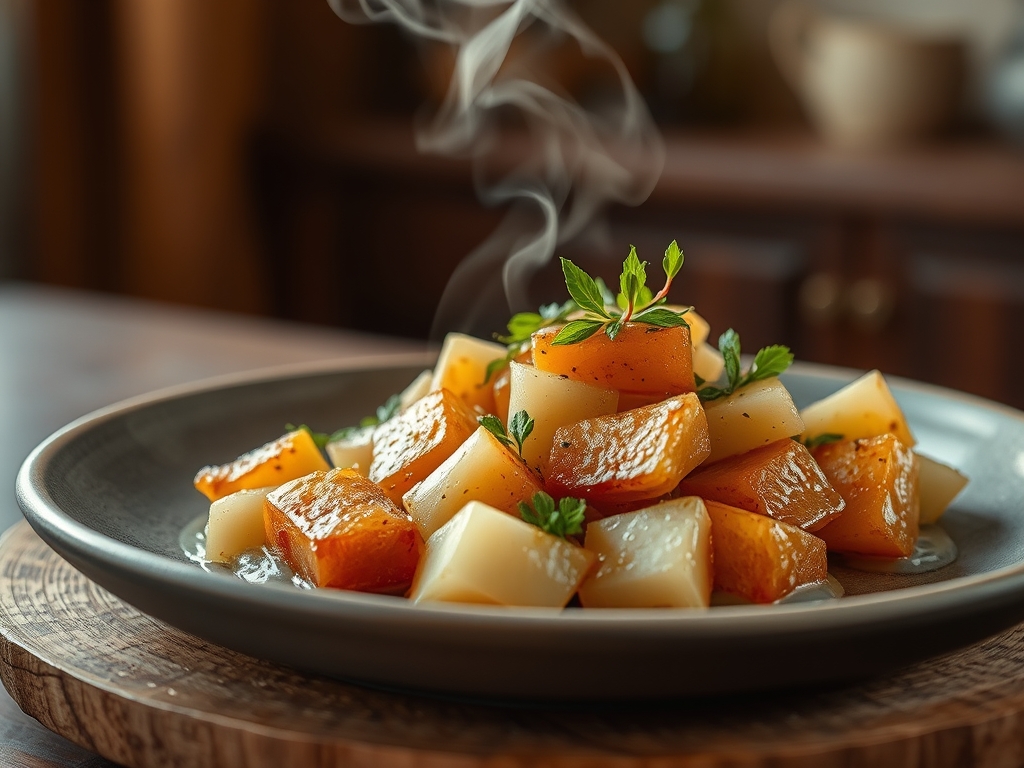
Referencing our Boiled Cassava Data photo, notice the "Fracture Pattern." High-quality boiled yuca should look like it wants to fall apart but maintains its geometric integrity. If your yuca looks "chalky" or bright white, it is undercooked and potentially toxic. If it looks "grey" or slimy, you have over-hydrated the starch. The ideal visual cue is a soft, matte glow with visible fissures where the butter or oil can pool. If you see uneven browning during a secondary sear, it means your initial boil didn't hydrate the surface evenly; ensure the roots are fully submerged during the entire boiling phase to avoid "dry spots" on the tuber.
THE DEEP DIVE
Macro Nutrition Profile
Cassava is a carbohydrate powerhouse. A standard 100g serving delivers approximately 160 calories, dominated by complex starches. It is virtually fat-free and low in protein, making it an ideal "fueling" substrate. It is exceptionally high in Vitamin C and Manganese, providing antioxidant support alongside its caloric density.
Dietary Swaps (Vegan/Keto/GF)
- Vegan: Naturally compliant. Use avocado oil or coconut oil for a richer, tropical profile.
- Keto: Negative. Cassava is the antithesis of Keto; it is pure starch. For a low-carb alternative, apply these same boiling techniques to daikon radish or cauliflower florets.
- GF: Naturally gluten-free. It is a premier flour substitute in Celiac-safe baking due to its high starch-binding properties.
Meal Prep & Reheating Science
To maintain molecular structure, do not microwave yuca in a dry bowl. The starch will undergo rapid retrogradation, turning into a brick. To reheat, steam the pieces for 5 minutes or sauté them in a pan with a splash of water to deglaze the surface and re-introduce moisture to the crystalline starch structures.
THE KITCHEN TABLE
How do I know if the cyanide is actually gone?
The boiling process, combined with peeling and discarding the water, reduces cyanogens to safe levels. If the yuca is fork-tender and lacks a bitter, metallic aftertaste, the chemical infrastructure has been successfully neutralized for consumption.
Can I use frozen yuca for this protocol?
Yes. Frozen yuca is often pre-peeled and blanched, which actually jumpstarts the starch breakdown. It is a reliable shortcut that maintains the Boiled Cassava Data integrity while reducing prep time by approximately ten minutes.
Why is my yuca gummy instead of fluffy?
Gumminess is a symptom of over-agitation. If you stir the pot too vigorously, you break the starch granules and release amylopectin into the water, creating a viscous glue. Handle the roots gently with tongs to preserve the cellular walls.
Is the center core edible?
The woody "spine" is technically edible but structurally offensive. It is a highly lignified vascular bundle that does not soften during boiling. For a professional-grade presentation, always extract this "string" before serving your guests.