Listen to the sound of a kitchen operating at peak efficiency. It is not the roar of a grill or the scream of a blender; it is the rhythmic, rhythmic thrum of a heavy-bottomed pot vibrating against an induction burner. We are discussing the structural backbone of the Mediterranean pantry. Boiled Chickpeas are not merely a side dish. They are a masterclass in cellular hydration and starch gelatinization. Imagine the transformation as a shriveled, pebble-hard legume absorbs three times its weight in water, expanding until the skin is taut and the interior reaches a state of buttery, architectural perfection. When executed with precision, the result is a savory pearl that yields to the slightest pressure but retains a defiant structural integrity. This is the foundation of every high-performance hummus and the textural contrast in every elite salad. We are not just cooking; we are re-engineering a biological specimen into a culinary asset. Forget the canned substitutes that swim in a viscous, metallic brine. We are here to audit your process and elevate your legume density to professional standards.
THE DATA MATRIX
| Metric | Specification |
|---|---|
| Prep Time | 12 Hours (Passive Soak) |
| Execution Time | 45 – 90 Minutes |
| Yield | 750g / 3 Cups |
| Complexity (1-10) | 3 |
| Estimated Cost per Serving | $0.25 USD |
THE GATHERS
Ingredient Protocol:
- 500g / 2.25 cups Dried Garbanzo Beans (Kabuli variety preferred).
- 2L / 8.5 cups Filtered Water (for soaking).
- 1.5L / 6.5 cups Fresh Filtered Water (for the boil).
- 10g / 2 tsp Sodium Bicarbonate (Baking Soda).
- 15g / 1 tbsp Diamond Crystal Kosher Salt.
- 2 units / 2 units Bay Leaves.
- 3 cloves / 3 cloves Garlic (crushed).
Section A: Ingredient Quality Audit:
The primary failure point in Boiled Chickpeas is the age of the raw material. Legumes stored for over eighteen months undergo a lignification process where the cell walls become virtually impenetrable to moisture. If your beans remain chalky after ninety minutes of thermal exposure, your inventory is compromised. To fix this, increase your Sodium Bicarbonate concentration. The alkaline environment breaks down the hemicellulose in the skins, forcing hydration into the stubborn core. Furthermore, always use filtered water. High mineral content (hard water) contains calcium and magnesium ions that cross-link with pectin, creating a reinforced shell that prevents the interior from softening. If your local tap water is "hard," your chickpeas will never reach a buttery consistency without chemical intervention.
THE MASTERCLASS
1. The Hydration Phase
Begin by placing your dried beans on a clean workstation and using a bench scraper to sort through them, removing any stones or shriveled outliers. Submerge the beans in 2L of water. This is not a suggestion; it is a requirement. The beans will expand significantly.
Pro Tip: Adding a pinch of salt to the soaking water facilitates a process called ion exchange. Sodium ions replace some of the calcium and magnesium in the bean skins, which tenderizes the exterior before the heat is even applied. Use a digital scale to ensure your salt-to-water ratio remains at a precise 1 percent.
2. The Alkaline Rinse
Drain the soaking water and discard it. Place the hydrated beans into a heavy saucier or Dutch oven. Sprinkle the baking soda over the damp beans and heat them over medium-high for three minutes, stirring constantly. You will notice a slight foaming and a distinct nutty aroma.
Pro Tip: This "dry sauté" with baking soda raises the pH level significantly. It pre-processes the pectin in the skins, ensuring that once the water is added, the heat can penetrate the starch granules instantly. This technique reduces your total cooking time by nearly 40 percent.
3. The Thermal Infusion
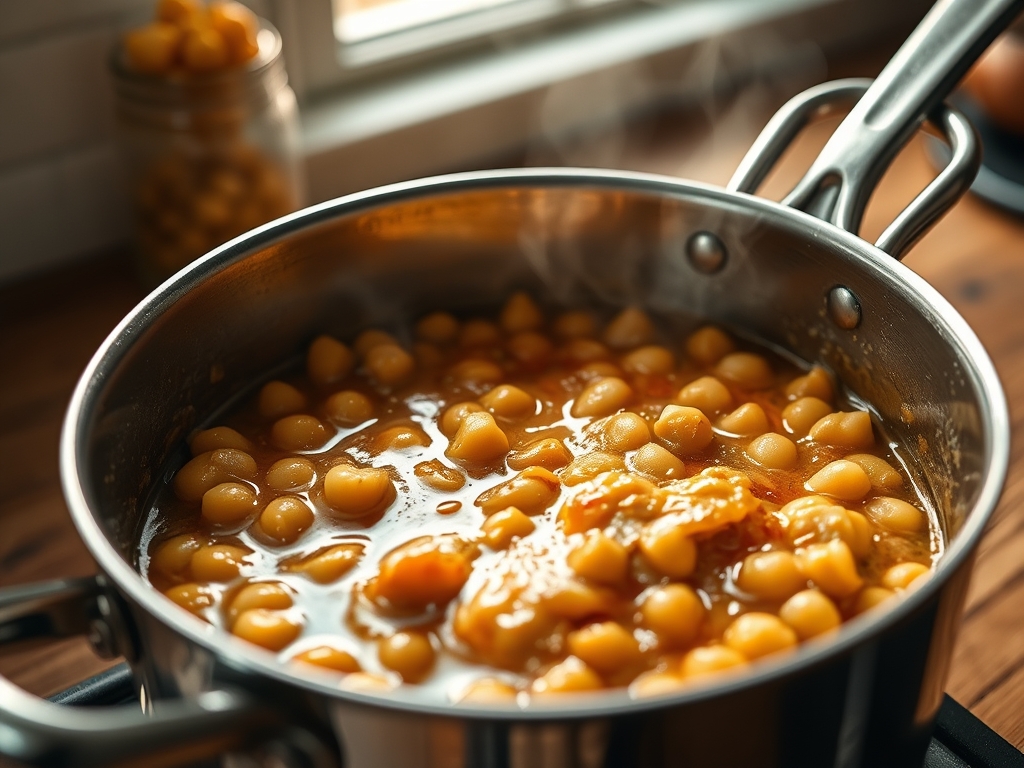
Add 1.5L of fresh water, the garlic, and the bay leaves. Bring the vessel to a hard boil, then immediately reduce to a gentle simmer. Use a fine-mesh skimmer to remove the gray foam (aquafaba proteins) that rises to the surface.
Pro Tip: Maintaining a "lazy bubble" is critical. A violent boil will cause the beans to collide, rupturing the skins and releasing starch into the water, which creates a muddy texture. Use a probe thermometer to maintain a water temperature between 92 and 95 degrees Celsius for optimal starch conversion.
4. The Texture Verification
At the 45-minute mark, begin sampling. A perfectly cooked chickpea should be easily crushed between your thumb and forefinger with zero graininess. Once this state is achieved, remove from the heat but do not drain immediately.
Pro Tip: Allow the beans to cool in their cooking liquid (the pot liquor). As the temperature drops, the beans will re-absorb some of the seasoned fluid, which further seasons the interior and prevents the skins from cracking due to rapid evaporation.
Section B: Prep & Timing Fault-Lines:
Human error usually manifests in the "soak-to-simmer" transition. If you skip the soak and go straight to the boil, the exterior will overcook and disintegrate while the center remains a "bullet." This is a failure of thermal distribution. If you find yourself in a time crunch, use the "Power Soak" method: bring water and beans to a boil for two minutes, then turn off the heat and let them sit for one hour. This mimics a twelve-hour soak by using kinetic energy to force water into the legume's vascular system.
THE VISUAL SPECTRUM
Section C: Thermal & Visual Troubleshooting:
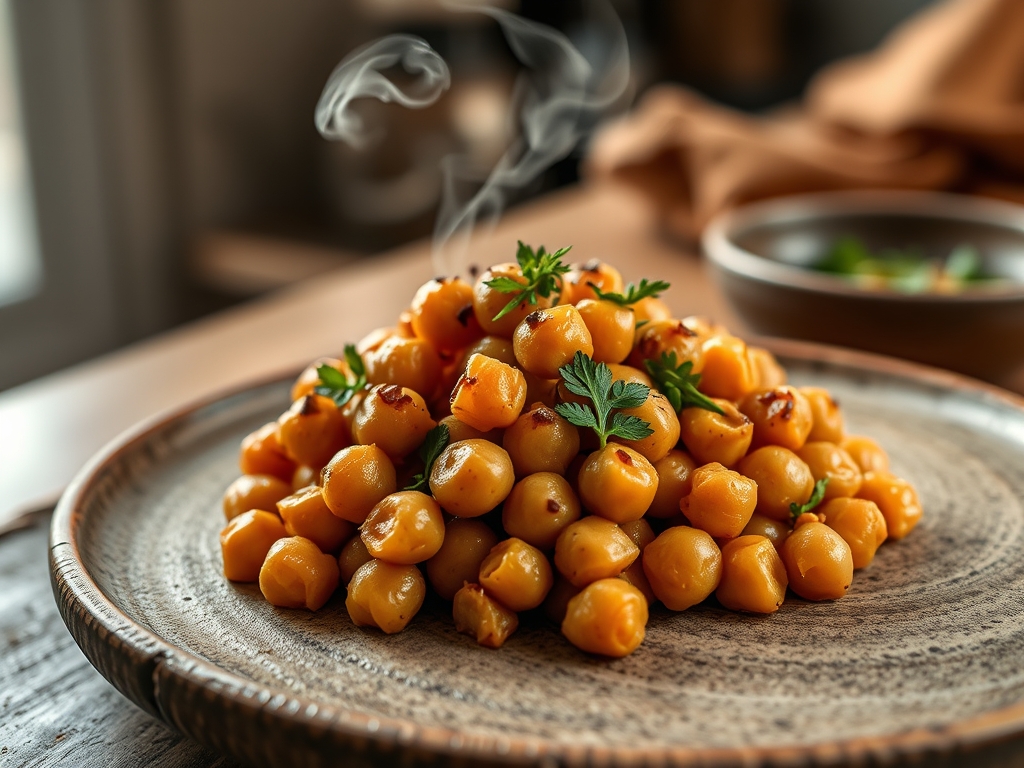
Referencing the Masterclass photo, notice the uniform, pale golden hue and the lack of detached skins floating in the periphery. If your Boiled Chickpeas appear gray or dull, you likely neglected to skim the foam during the initial boil. That foam contains impurities that discolor the broth. If the skins are peeling away like wet tissue paper, your alkaline concentration was too high or your simmer was too aggressive. To fix a "mushy" batch, shock the drained beans in ice water to stop the residual cooking. If the beans look wrinkled, they have lost moisture to the air; always keep them submerged in a light film of olive oil or their own cooking liquid to maintain that glossy, professional sheen.
THE DEEP DIVE
Macro Nutrition Profile:
Boiled Chickpeas are a powerhouse of slow-release carbohydrates and plant-based protein. A 100g serving provides approximately 164 calories, 9g of protein, 8g of fiber, and only 2.6g of fat. They are a "complete" enough protein source to sustain high-output kitchen environments.
Dietary Swaps:
- Vegan: Naturally compliant. Use the leftover cooking liquid (aquafaba) to create vegan meringues or to aerate sauces.
- Keto: Chickpeas are high-carb; substitute with boiled lupini beans for a similar texture with lower glycemic impact.
- GF: Naturally gluten-free. Ensure your spices are certified to avoid cross-contamination.
Meal Prep & Reheating Science:
To maintain molecular structure, store chickpeas in their cooking liquid. When reheating, do not microwave them dry, as this causes the starch to retrogress and become rubbery. Instead, simmer them gently in a small amount of liquid or render them in a pan with fat to create a crisp exterior while maintaining a creamy core.
THE KITCHEN TABLE
Why are my chickpeas still hard after hours of boiling?
Your beans are likely "old stock" or your water is too hard. Add a half-teaspoon of baking soda to the boiling water to force the cell walls to soften.
Do I really need to soak them overnight?
Yes. Soaking ensures even hydration. Without it, the outside overcooks before the inside softens, leading to a structural failure that ruins the mouthfeel of your final dish.
What is the best way to flavor the beans?
Infuse the cooking water with aromatics. Garlic, bay leaves, and even a piece of kombu seaweed will add depth and umami without compromising the integrity of the legume.
Can I freeze boiled chickpeas?
Absolutely. Drain them thoroughly and pat dry before freezing in a single layer on a sheet tray. This prevents them from clumping and preserves their individual spherical shape.