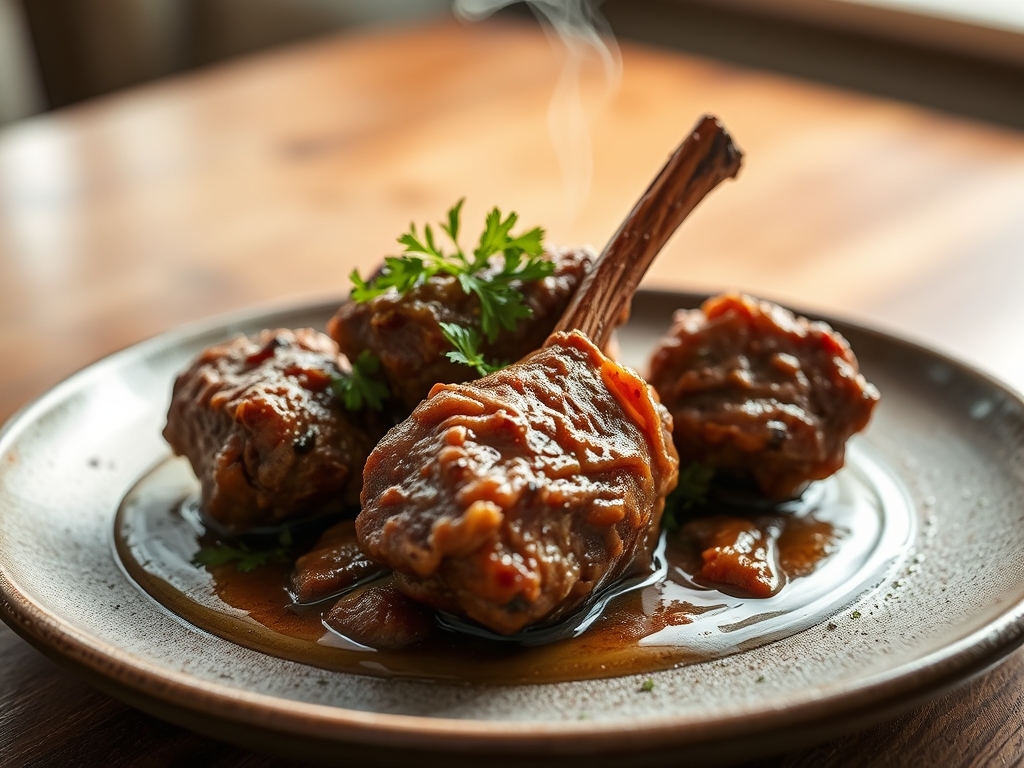
Welcome to the olfactory battlefield of the professional kitchen; a place where the line between a transcendent jus and a barnyard disaster is thinner than a sheet of gold leaf. We are here to master Lamb Stock Pungency. If you are looking for a mild, polite vegetable broth, you have wandered into the wrong laboratory. We are hunting for the deep, primal essence of the ovine carcass; that specific profile of branched-chain fatty acids that defines the very soul of the lamb. Most home cooks fear the funk, but we embrace it as our primary structural component. To achieve true depth, we must manipulate the connective tissue and marrow through a series of thermal assaults, ensuring that every drop of liquid is a concentrated hit of umami. We are not just boiling bones; we are performing a high-stakes extraction. Prepare your senses for an aromatic profile that is unapologetically bold, viscous, and piquant. This is the audit of the ultimate foundation.
THE DATA MATRIX
| Metric | Specification |
|---|---|
| Prep Time | 45 Minutes |
| Execution Time | 8 to 12 Hours |
| Yield | 4 Liters / 1.05 Gallons |
| Complexity (1-10) | 7 |
| Estimated Cost per Serving | $1.15 USD |
THE GATHERS
Ingredient Protocol:
- 2.5 kg / 5.5 lbs Lamb bones (Neck and shank preferred for collagen)
- 500g / 1.1 lbs Mirepoix (Onion, carrot, celery in 2:1:1 ratio)
- 150g / 5.3 oz Tomato paste (Double concentrated)
- 500ml / 2 cups Dry red wine (High acidity)
- 5 Liters / 1.32 Gallons Cold filtered water
- 10g / 2 tsp Black peppercorns
- 5g / 1 tsp Dried thyme
- 3 Bay leaves
- 4 Garlic cloves (Smashed)
Section A: Ingredient Quality Audit:
If your raw materials lack the necessary Lamb Stock Pungency, your final product will be hollow. The most common failure point is using "clean" bones with no meat or connective tissue. If your bones look like bleached driftwood, you must supplement with 500g of cheap lamb neck or breast to provide the proteins required for the Maillard reaction. If your mirepoix is soft or oxidizing, the sugars will be fermented rather than caramelized, leading to a sour aftertaste. Technical fix: if the bones are too lean, add 50ml of neutral oil during the roasting phase to facilitate heat transfer and ensure even browning.
THE MASTERCLASS
Step 1: The Thermal Fracture (Roasting)
Arrange your bones in a single layer on a heavy-duty roasting pan. Execute a high-heat roast at 220C / 425F until the bones are a deep, mahogany brown. This is not the time for subtlety. You are looking for the total transformation of surface proteins.
Pro Tip: Use a digital scale to ensure your bone-to-water ratio remains precise. The science here is the Maillard reaction; the amino acids and reducing sugars are creating hundreds of different flavor compounds that provide the backbone of the stock.
Step 2: The Mirepoix Integration
Once the bones are browned, add your mirepoix directly to the roasting pan. Continue roasting for another 20 minutes. The vegetables should be softened and charred at the edges. Add the tomato paste in the final 5 minutes to "fry" it in the rendered lamb fat.
Pro Tip: Use a bench scraper to move the vegetables around the pan, ensuring they don't stick and burn. Frying the tomato paste (pincage) removes its raw acidity and develops a deeper, brick-red color.
Step 3: Deglazing the Essence
Transfer the bones and vegetables to a large stockpot. Place the roasting pan over a burner and add the red wine. Use a wooden spoon to scrape every bit of fond (the browned bits) from the bottom of the pan. Pour this liquid into the stockpot.
Pro Tip: A high-quality saucier or heavy-bottomed pot is essential to prevent scorching during the long simmer. The wine acts as a solvent, dissolving the flavor-rich compounds that the water alone cannot reach.
Step 4: The Controlled Extraction
Cover the solids with cold filtered water. Bring to a very slow simmer. Never, under any circumstances, allow the liquid to reach a rolling boil. A boil will emulsify the fat into the liquid, resulting in a cloudy, greasy mess.
Pro Tip: Use a fine-mesh skimmer to remove the "scum" or denatured proteins that rise to the surface in the first hour. Maintaining a temperature of 85C to 90C ensures a clear, gelatinous result.
Step 5: The Final Refinement
After 8 to 12 hours, strain the stock through a chinois or a sieve lined with cheesecloth. Do not press on the solids; let gravity do the work to maintain clarity. Chill immediately in an ice bath to prevent bacterial growth.
Pro Tip: A conical strainer (chinois) is the professional standard for achieving a silk-like texture. Rapid cooling is vital for food safety and to preserve the volatile aromatics you have worked so hard to extract.
Section B: Prep & Timing Fault-Lines:
The most frequent human error is the "Short-Cut Simmer." If you pull the stock at 4 hours, you have wasted your money. The collagen in lamb bones requires sustained heat to convert into gelatin, which provides the viscous mouthfeel. If your temperature fluctuates too high, you will "cook" the impurities into the liquid, making it impossible to clarify later. Always use a probe thermometer to audit your burner's low-setting performance.
THE VISUAL SPECTRUM
Section C: Thermal & Visual Troubleshooting:
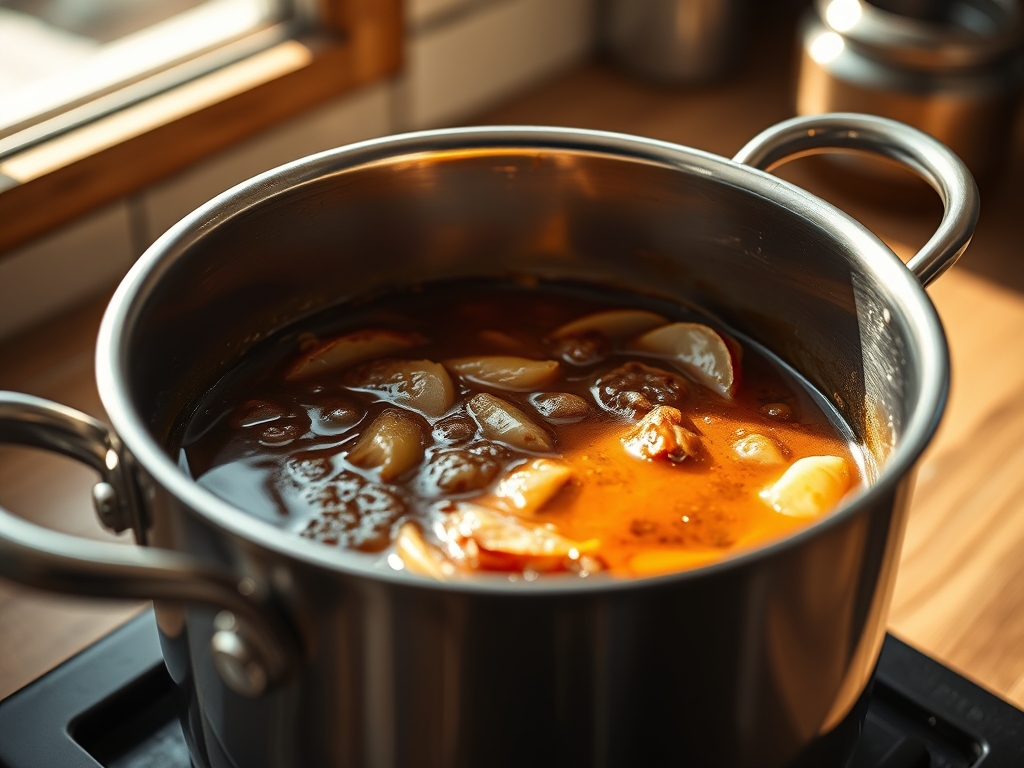
Look at the Masterclass photo above. Notice the deep, translucent amber hue. If your stock is pale or yellow, you failed the roasting phase; you must increase your roasting time or temperature next time. If the stock is opaque or "muddy," you likely allowed it to boil or stirred the bones too vigorously during the simmer. To fix a cloudy stock, you can perform a "raft" clarification using egg whites, though this will slightly diminish the Lamb Stock Pungency. The visual goal is a liquid that looks like dark tea but feels like liquid velvet on the tongue.
THE DEEP DIVE
Macro Nutrition Profile:
A standard 250ml serving contains approximately 45 calories, 6g of protein, 2g of fat, and 0g of carbohydrates. The primary nutritional value lies in the high concentration of collagen-derived amino acids like glycine and proline.
Dietary Swaps:
- Vegan: Impossible. You can create a "Mushroom Umami Broth" using dried porcini and soy sauce, but it will lack the specific fatty acid profile of lamb.
- Keto/GF: This recipe is naturally keto-friendly and gluten-free. Ensure your tomato paste does not contain added starches.
Meal Prep & Reheating Science:
When chilled, the stock should set into a firm, rubbery jelly. This indicates a successful collagen-to-gelatin conversion. To reheat, melt over low heat to avoid scorching the proteins. Do not microwave on high power, as this can cause "popping" and uneven heating of the gelatin molecules.
THE KITCHEN TABLE
Why is my lamb stock so smelly?
That is the Lamb Stock Pungency you are looking for! It comes from caprylic and hircic acids. If it smells "rotten," your bones were not fresh. If it is just "strong," that is the mark of a professional extraction.
Can I use a pressure cooker?
Yes, but you sacrifice clarity for speed. A pressure cooker will extract the gelatin in 2 hours, but the high-pressure environment often emulsifies the fats, leading to a cloudy finish.
How long does it stay fresh?
Store in the refrigerator for up to 5 days. For long-term storage, freeze in silicone molds. The high gelatin content protects the flavor from freezer burn for up to 6 months.
Should I salt the stock during the simmer?
Absolutely not. You will likely reduce this stock later to make a sauce. If you salt it now, the salt concentration will become unbearable once the liquid evaporates. Always season at the very end of your final dish.