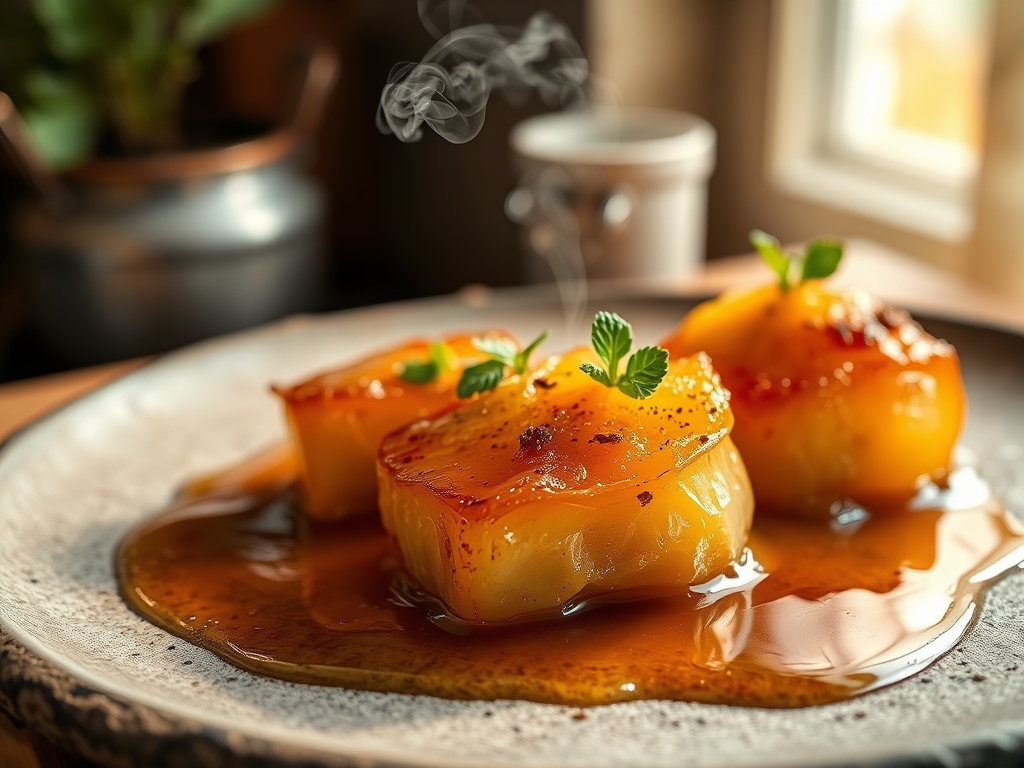
The scent of scorching sugar is the kitchen's ultimate siren song; it is a high-stakes olfactory warning that you are seconds away from either culinary perfection or a carbonized disaster. We are stepping into the arena of high-performance condiments where the Honey Gastrique Audit begins with the violent collision of wildflower nectar and acetic acid. This is not a simple syrup. This is a structural masterpiece of viscosity and sharpness designed to pierce through the heavy fats of a seared duck breast or a roasted pork belly. To master the gastrique is to master the physics of evaporation and the chemistry of the Maillard reaction. We are looking for a glaze that clings to the back of a spoon with the tenacity of liquid velvet while delivering a piquant punch that resets the palate. If your current sauces are thin, cloying, or lack that essential acidic bite, your infrastructure is failing. It is time to recalibrate your ratios and execute a technical overhaul of your reduction protocols.
THE DATA MATRIX
| Metric | Specification |
|---|---|
| Prep Time | 5 Minutes |
| Execution Time | 15 Minutes |
| Yield | 350ml / 1.5 Cups |
| Complexity (1-10) | 6 |
| Estimated Cost per Serving | $0.45 |
THE GATHERS
Ingredient Protocol:
- 200g / 0.6 cup High-Quality Honey (Clover or Wildflower)
- 240ml / 1 cup Champagne Vinegar or Apple Cider Vinegar
- 60ml / 0.25 cup Dry White Wine (optional for depth)
- 2g / 0.5 tsp Fine Sea Salt
- 1g / 0.25 tsp Cracked Black Peppercorns
- 1 sprig Fresh Thyme or Rosemary (optional for infusion)
Section A: Ingredient Quality Audit:
The primary failure point in a gastrique is the quality of the acid. If you use a bottom-shelf white distilled vinegar, the result will be harsh and metallic. Technical Fix: Always opt for vinegars with a minimum of 5% acidity but with fruit-forward profiles like champagne or sherry vinegar to provide a complex backbone. If your honey has crystallized, do not discard it. The crystallization is merely a physical state change of the glucose. Technical Fix: Gently warm the honey container in a water bath at 40C / 104F to reliquefy the sugars before measuring to ensure your mass-to-volume ratio remains accurate. Using a digital scale is non-negotiable here; volumetric measurements of honey are notoriously inaccurate due to surface tension and air pockets.
THE MASTERCLASS
1. Thermal Induction and Sugar Stabilization
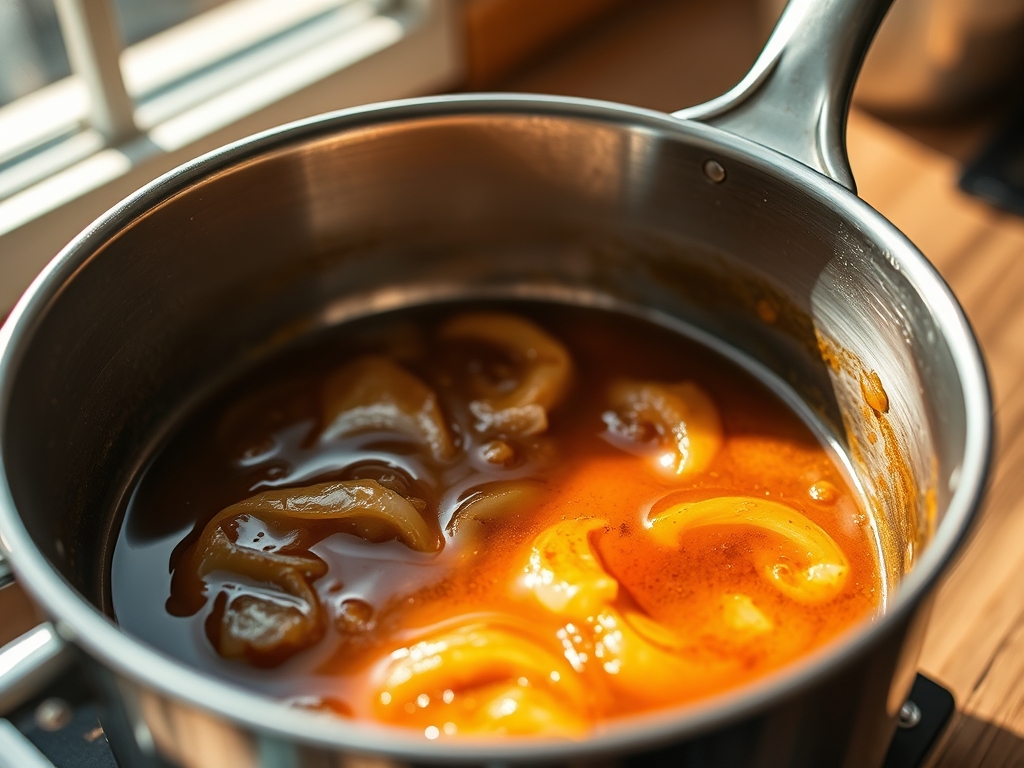
Place your honey in a heavy-bottomed stainless steel saucier. Set the heat to medium-high. You are looking for the honey to begin foaming at the edges. This indicates the water content is evaporating and the sugars are beginning to concentrate.
Pro Tip: Use a heavy-bottomed saucier rather than a traditional saucepan. The curved walls of a saucier allow for better whisk access to the corners, preventing localized hotspots where sugar might burn. This geometry ensures even heat distribution across the entire molecular surface of the honey.
2. The Caramelization Phase
Monitor the color shift. The honey will transition from pale gold to a deep, amber hue. This is the Maillard reaction in tandem with caramelization. You are looking for a "nutty" aroma. If it smells like smoke, you have gone too far.
Pro Tip: Keep a digital thermometer handy. Sugars transition rapidly between 160C and 175C (320F to 350F). Use a silicone spatula to scrape the sides of the pan constantly; this prevents "seed crystals" from forming, which could cause the entire batch to seize into a grainy mess.
3. The Deglaze Maneuver
Once the honey has reached a deep amber, pour in the vinegar and wine in one steady stream while whisking vigorously. Be prepared for a massive release of steam. The cold liquid hitting the hot sugar will cause the honey to seize momentarily into a solid mass.
Pro Tip: This is where your bench scraper or a long-handled whisk becomes vital. Do not panic when the honey hardens. Continue to simmer over medium heat; the acid will slowly re-dissolve the sugar solids into a homogenous, viscous liquid. This is the "deglaze" phase that marries the two opposing flavor profiles.
4. Infusion and Reduction
Add your salt, peppercorns, and herbs. Reduce the heat to a low simmer. You are now reducing the volume to achieve the desired "nappe" consistency, where the sauce coats the back of a spoon without running off immediately.
Pro Tip: Use a digital scale to weigh the pan before and after reduction if you want absolute consistency across batches. Reducing the total weight by 30% usually yields the perfect balance of piquant acidity and syrupy sweetness.
Section B: Prep & Timing Fault-Lines:
The most common human error is the "Flash Burn." If the heat is too high, the honey moves from caramel to carbon in less than ten seconds. Technical Fix: If you see wisps of dark smoke, the batch is compromised and cannot be saved by adding more liquid; discard and restart. Another fault-line is the "Premature Deglaze." If you add the vinegar before the honey has darkened, the gastrique will lack the bitter complexity needed to balance the sugar. Technical Fix: Wait for the "pop" of the first few bubbles turning dark brown before introducing the acid.
THE VISUAL SPECTRUM
Section C: Thermal & Visual Troubleshooting:
Referencing the Masterclass photo, your gastrique should possess a translucent, jewel-toned clarity. If your sauce appears cloudy, you likely boiled it too violently, which can aerate the sugars and trap micro-bubbles, or your honey contained high amounts of pollen and wax. Technical Fix: Pass the finished glaze through a fine-mesh chinois to remove any solids or impurities. If the color is too pale, you failed to reach the proper caramelization temperature. Technical Fix: You can deepen the color by adding a teaspoon of dark brown sugar or a drop of balsamic vinegar, though this is a "cheat" and lacks the depth of a proper reduction. If the texture is "stringy," the sugar has been over-reduced into a hard-crack stage. Technical Fix: Whisk in 15ml / 1 tbsp of hot water at a time until the viscosity returns to a pourable state.
THE DEEP DIVE
Macro Nutrition Profile:
Per 15ml (1 tbsp) serving: 45 Calories, 0g Fat, 12g Carbohydrates (all sugar), 0g Protein. This is a high-glycemic condiment and should be used as a finishing accent rather than a primary sauce component.
Dietary Swaps:
- Vegan: Replace honey with agave nectar or maple syrup. Note that maple syrup has a lower sugar concentration and will require a longer reduction time to achieve the same viscous quality.
- Keto: This is a sugar-based sauce and is inherently non-keto. However, a "faux-gastrique" can be made using Allulose, which caramelizes similarly to real sugar, though the flavor profile will be less complex.
- GF: Naturally gluten-free. Ensure your vinegar source is not malt-based.
Meal Prep & Reheating Science:
A honey gastrique is shelf-stable for weeks due to its high sugar and acid content. To maintain its molecular structure, store it in a glass jar at room temperature. If refrigerated, the honey may crystallize. To reheat, do not microwave; the uneven electromagnetic waves can create "hot spots" that burn the sugar. Instead, place the jar in a warm water bath or gently render it back to liquid in a small saucepan over low heat.
THE KITCHEN TABLE
How long does a honey gastrique last?
Due to the high acidity and sugar concentration, it will stay fresh in an airtight container for up to 3 months. Refrigeration is optional but may cause crystallization.
Why is my gastrique too thin?
You likely pulled it off the heat before enough water evaporated. Return it to a simmer and reduce further until it coats a spoon.
Can I use balsamic vinegar?
Yes, but balsamic is already quite sweet. Reduce the honey volume by 20% to prevent the sauce from becoming cloying.
My sauce tastes like pure vinegar. What happened?
The reduction wasn't long enough to mellow the acetic acid. Continue simmering to allow the harsh notes to evaporate, or add a pinch of salt to mask the sharpness.