Imagine standing over a cauldron where chemistry and culinary obsession collide. The air is thick, saturated with the scent of rendered marrow and the heavy promise of collagen. This is not a simple soup; it is a high-performance lipid suspension. When we discuss Tonkotsu, we are really discussing the engineering of Pork Stock Density. To achieve that legendary, creamy mouthfeel, you must force a violent marriage between water and fat. We are looking for a liquid that coats the back of a spoon like heavy cream but carries the primal, savory weight of a thousand simmered bones. If your broth is translucent, you have failed the structural audit. If it is watery, your emulsion has collapsed. We require a suspension so stable that it remains opaque even at room temperature. This is the gold standard of ramen infrastructure. We are here to transform raw, skeletal matter into a viscous, white gold through the sheer application of thermal energy and mechanical agitation. Let us begin the audit of your kitchen's capabilities.
THE DATA MATRIX
| Metric | Specification |
|---|---|
| Prep Time | 2 Hours (Cleaning/Blanching) |
| Execution Time | 12 to 18 Hours |
| Yield | 4 Liters / 1.05 Gallons |
| Complexity (1-10) | 9 |
| Estimated Cost per Serving | $3.50 – $5.00 |
THE GATHERS
Ingredient Protocol:
- 5 kg / 11 lbs Pork Femur and Neck Bones (Split to expose marrow)
- 500 g / 1.1 lbs Pork Fat Back (Skinless)
- 2 Large White Onions (Halved, charred)
- 100 g / 3.5 oz Fresh Ginger (Smashed)
- 1 Head of Garlic (Halved horizontally)
- 10 Liters / 2.6 Gallons Filtered Water (Initial fill)
- 50 ml / 3.4 tbsp Neutral Oil (For charring aromatics)
Section A: Ingredient Quality Audit:
The primary failure point in Pork Stock Density is the "Old Bone" syndrome. If your bones show signs of freezer burn or graying marrow, your broth will take on a piquant, metallic tang that no amount of garlic can mask. Technical Fix: Always perform a pre-soak in cold water for at least six hours to leach out residual heme. If the bones still look dull, add a tablespoon of white vinegar to the soak; the acidity helps draw out impurities before the heat hits. Furthermore, ensure your fat back is pure white. Yellowing fat indicates oxidation, which will shatter your emulsion and result in a greasy, separated mess rather than a creamy suspension.
THE MASTERCLASS
1. The Purification Blanch
Place your bones in a large stockpot and cover with cold water. Bring to a hard boil for 20 minutes. You will see a gray, foamy scum rise to the surface. Drain the entire pot and scrub every bone under cold running water to remove coagulated blood.
Pro Tip: Use a stiff-bristled kitchen brush or a bench scraper to remove stubborn bits of marrow or blood from the bone crevices. The science here is simple: impurities prevent the formation of a clean protein-lipid bond, which is essential for a high Pork Stock Density.
2. The Thermal Agitation Phase
Return the cleaned bones to the pot with fresh filtered water and the pork fat back. Bring to a violent, rolling boil. Unlike a French consomme which requires a gentle simmer, Tonkotsu requires high-velocity bubbles to aerate and render the fats into the liquid.
Pro Tip: Use a digital scale to weigh your fat back precisely. Too much fat will overwhelm the water's capacity to emulsify; too little will result in a thin, watery broth. Maintaining a constant, vigorous boil is the mechanical force required to create the suspension.
3. Aromatic Infusion and Charring
In a separate saucier or cast iron pan, char your onions, ginger, and garlic until the surfaces are blackened. Add these to the pot during the final four hours of the boil. This introduces the Maillard reaction products into the liquid without darkening the color too early.
Pro Tip: Charring the aromatics creates a complex flavor profile that cuts through the heavy lipids. The carbonized sugars infuse the broth with a smoky depth that balances the richness of the pork marrow.
4. The Final Emulsion Audit
Once the bones have softened and the liquid has reduced by half, use an immersion blender or a heavy whisk to further break down any remaining large fat globules. Strain the broth through a fine-mesh chinois or a cheesecloth-lined strainer into a clean vessel.
Pro Tip: If your broth feels thin, you can deglaze a small pan with a cup of the stock and whisk in a bit of blended pork fat to re-emulsify. A saucier is the ideal tool for this small-scale correction before reintegrating it into the main batch.
Section B: Prep & Timing Fault-Lines:
The most common human error is the "Fear of the Boil." Many home cooks lower the heat, fearing they will burn the bottom of the pot. This results in a clear soup. You must maintain a hard boil for the entire duration. If the water level drops too low, replenish it with boiling water from a kettle, never cold water. Cold water shocks the lipids and can cause the emulsion to break. Use a digital thermometer to ensure the core temperature stays at a constant 100 degrees Celsius.
THE VISUAL SPECTRUM
Section C: Thermal & Visual Troubleshooting:
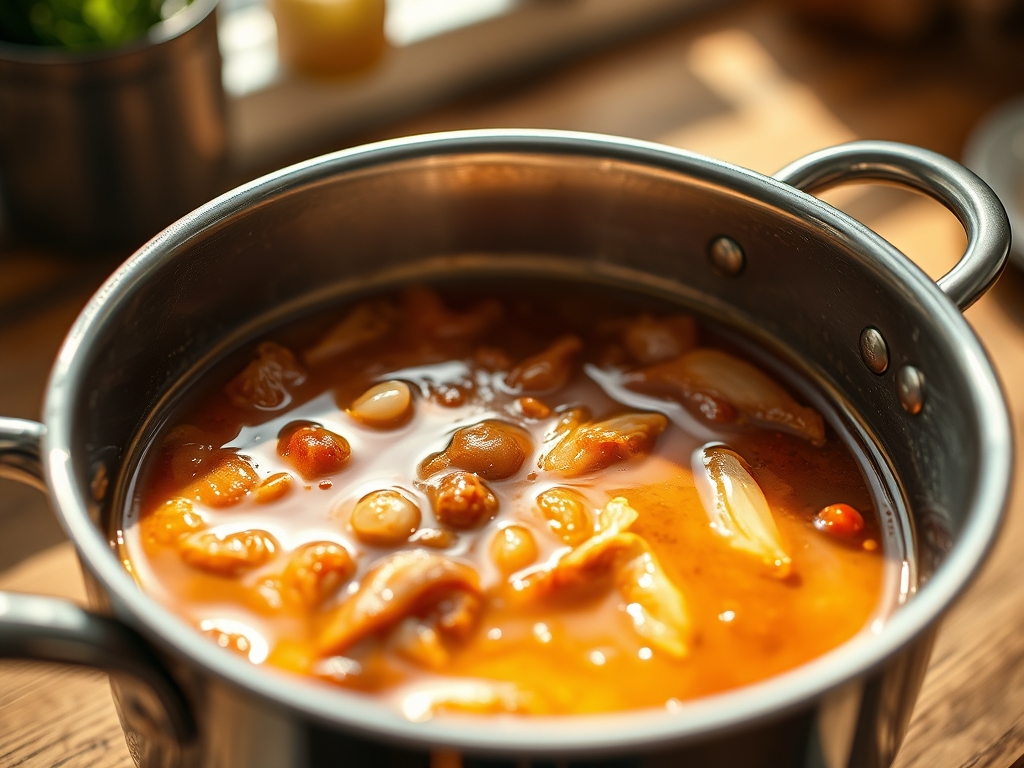
Look at the Masterclass photo above. Notice the opaque, milky-white consistency and the way the light reflects off the micro-bubbles on the surface. This is the visual signature of high Pork Stock Density. If your broth looks gray, you skipped the scrubbing phase of the blanch. If it looks yellow or brown, you either charred your aromatics too early or used bones with too much meat attached. To fix a gray broth, you can whisk in a small amount of milk or cream as a "cheat," though a purist would recommend a secondary high-speed blending session to further aerate the fat particles, which naturally whitens the suspension through light refraction.
THE DEEP DIVE
Macro Nutrition Profile:
A standard 300ml serving of high-density Tonkotsu broth contains approximately 250 calories, 18g of fat, and 20g of protein. It is exceptionally high in collagen and glycine, making it a functional food for joint and gut health.
Dietary Swaps:
- Keto: Naturally compliant. Increase the fat back ratio for higher macros.
- Vegan: Replace pork bones with a combination of roasted soy milk, kombu, and fermented miso to mimic the viscosity.
- GF: Ensure your tare (seasoning base) uses Tamari instead of standard soy sauce.
Meal Prep & Reheating Science:
When cooled, this broth should turn into a solid, rubbery gelatin. This is proof of successful collagen extraction. To reheat, do not microwave. Use a small pot over medium heat and whisk constantly as it melts to ensure the lipids stay suspended. If you see oil slicks on top, use an immersion blender to re-emulsify the structure.
THE KITCHEN TABLE
Why is my Tonkotsu broth brown instead of white?
This usually occurs if you leave too much meat on the bones or if you do not scrub the bones thoroughly after the initial blanch. Residual blood and meat proteins darken during the long boiling process.
Can I make this in a pressure cooker?
Yes, but you must boil it vigorously for 30 minutes after the pressure release. The pressure cooker extracts the gelatin, but it lacks the mechanical agitation needed to emulsify the fats into a milky white liquid.
How long can I store the finished stock?
It will last 4 days in the refrigerator or 3 months in the freezer. When freezing, leave headspace in the container as the high water content will cause the suspension to expand.
What is the best bone-to-water ratio?
A 1:2 ratio by weight is ideal. For every 1kg of bones, use 2 liters of water. This ensures enough solvent to hold the extracted solids without diluting the Pork Stock Density.