Forget everything you know about watery vegetable stocks and pale imitations of flavor. We are entering the realm of hyper-concentrated glutamate extraction. This is not just a broth; it is a liquid infrastructure project designed to maximize umami density through controlled thermal degradation and osmotic pressure. When you analyze Mushroom Dashi Data, you are looking at the intersection of fungal polysaccharides and amino acid solubility. We are hunting for that deep, earth-shaking resonance that coats the palate and lingers long after the bowl is empty. This audit focuses on the precision required to pull every milligram of flavor from dried forest floor treasures. We are talking about a liquid so potent it functions as a culinary battery, storing energy and flavor to power soups, sauces, and braises. If your current stock lacks the structural integrity to stand up to bold seasonings, your extraction parameters are fundamentally flawed. It is time to recalibrate your kitchen sensors, sharpen your knives, and prepare for a high-yield infusion that redefines the concept of savory depth.
THE DATA MATRIX
| Metric | Specification |
|---|---|
| Prep Time | 15 Minutes |
| Execution Time | 45 Minutes |
| Yield | 1.5 Liters |
| Complexity (1-10) | 4 |
| Estimated Cost per Serving | $1.25 |
THE GATHERS
Ingredient Protocol:
- 50g / 1.75 oz Dried Shiitake Mushrooms (High-grade, thick caps)
- 20g / 0.7 oz Dried Porcini or Maitake
- 15cm / 6 inch Piece of Kombu (Dried Kelp)
- 1.8L / 7.6 cups Filtered Water
- 30ml / 2 tbsp Light Soy Sauce (for seasoning stabilization)
- 15ml / 1 tbsp Mirin (to balance acidity)
- 5g / 1 tsp Sea Salt
Section A: Ingredient Quality Audit:
The primary failure point in most infusions is the use of "dusty" or ancient dried fungi. If your mushrooms look gray and brittle rather than rich brown and leathery, your Mushroom Dashi Data will reflect a lack of aromatic complexity. To fix this, perform a quick "snap test." High-quality dried shiitakes should resist breaking and feel dense. If you are stuck with sub-par materials, increase your starting weight by 20 percent and include a single toasted star anise to mimic the missing woody depth. Additionally, ensure your kombu is not overly salty. If a white powdery film (mannitol) is excessive, do not wash it off; that is flavor. However, if the kelp smells fishy rather than like the clean ocean, discard it immediately.
THE MASTERCLASS
1. Cold Extraction Phase
Begin by placing your dried mushrooms and kombu in a heavy-bottomed saucier or stockpot. Add the filtered water and allow the ingredients to steep at room temperature for at least 30 minutes. This initial hydration period allows the cell walls of the fungi to soften without the immediate shock of high heat, which can lock in bitterness.
Pro Tip: Use a digital scale to measure your water by weight rather than volume for 100 percent accuracy. Cold-soaking initiates the release of 5-guanylate, a potent flavor enhancer that works synergistically with the glutamates in the kombu.
2. Controlled Thermal Ramp
Place the pot over medium-low heat. Your goal is to bring the liquid to a "shiver," which is approximately 60 degrees Celsius (140 degrees Fahrenheit). Do not let it boil yet. Maintain this temperature for 20 minutes to maximize the infuse process. Watch the kombu closely; if it begins to look slimy or releases bubbles, it is over-extracting.
Pro Tip: Use an instant-read thermometer to monitor the ramp. If the temperature climbs too fast, the kombu will release bitter tannins that are impossible to remove later. Precision is the difference between a clean dashi and a swampy mess.
3. Fungal Activation and Simmer
Remove the kombu with tongs and discard or reserve for another use. Increase the heat to medium-high until the liquid reaches a gentle simmer. At this stage, the mushrooms will begin to render their deep pigments and proteins into the water. Simmer for an additional 15 to 20 minutes until the liquid has reduced by roughly 10 percent.
Pro Tip: Use a bench scraper to move any floating debris back into the liquid or to clear your workspace. Constant movement ensures even heat distribution across the fungal surfaces, preventing localized scorching on the bottom of the pot.
4. Filtration and Stabilization
Turn off the heat. Strain the liquid through a fine-mesh sieve lined with cheesecloth into a clean container. Press the mushrooms lightly to extract the viscous liquid trapped in the caps, but do not crush them, as this introduces cloudiness. Stir in the soy sauce, mirin, and salt while the liquid is still hot to ensure full integration.
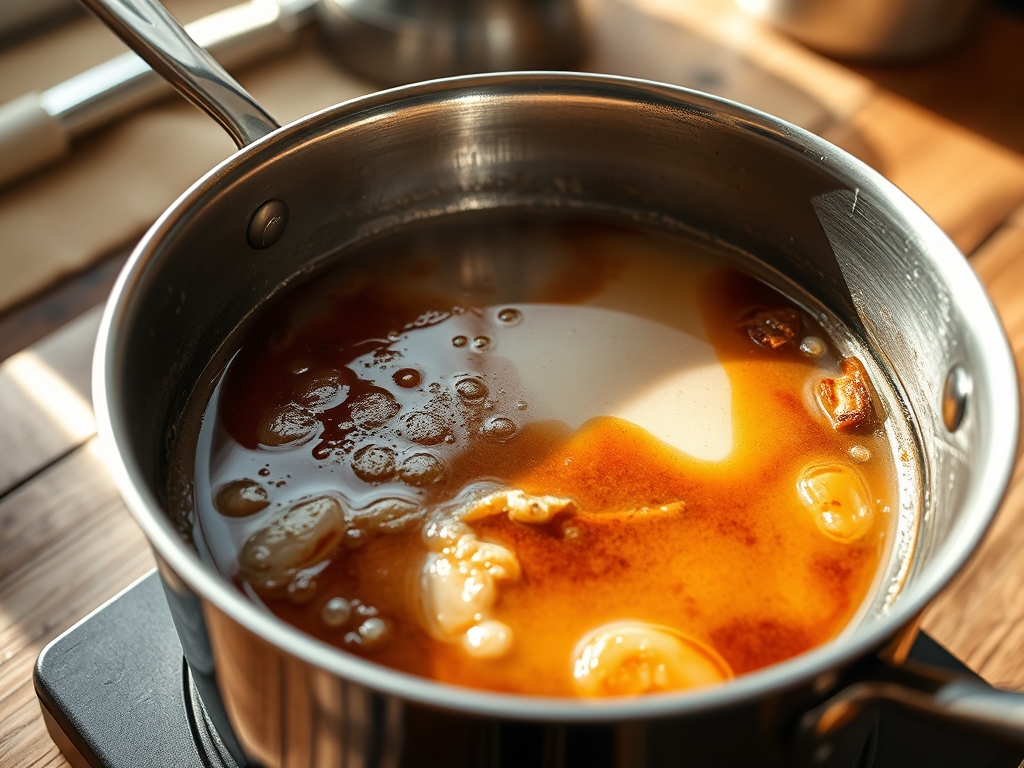
Pro Tip: Professional kitchens use a chinois for this step to achieve absolute clarity. The final product should be a transparent, dark amber liquid that reflects light with a slight golden sheen.
Section B: Prep & Timing Fault-Lines:
The most common error is the "boil-over" mistake. If you boil the kombu, you destroy the delicate glutamates and replace them with a metallic, bitter aftertaste. If this happens, you can attempt to save the batch by adding a pinch of sugar and a splash of rice vinegar to mask the bitterness, but the clarity will be compromised. Another timing issue involves the "squeeze." If you press the mushrooms too hard during straining, you release bitter spores and sediment that ruin the Mushroom Dashi Data profile for clarity and mouthfeel.
THE VISUAL SPECTRUM
Section C: Thermal & Visual Troubleshooting:
Referencing the Masterclass photo, your dashi should exhibit a "liquid gold" clarity. If your dashi looks muddy or opaque, you likely simmered it too aggressively, causing the fungal proteins to emulsify rather than remain suspended. To fix a cloudy dashi, you can perform a "raft" technique using egg whites to clarify the liquid, though this will slightly alter the flavor. If the color is too pale, you did not allow enough time for the cold-soak phase. Next time, ensure your mushrooms are fully submerged; use a small ceramic plate to weigh them down if they float. A perfect dashi should have tiny droplets of mushroom oil on the surface, indicating a successful extraction of fats and aromatics.
THE DEEP DIVE
Macro Nutrition Profile
Per 250ml serving, this dashi is exceptionally lean. It contains approximately 15 calories, 0g fat, 2g carbohydrates, and 1g protein. Its primary value lies in its micronutrient density, specifically B-vitamins and potassium sourced from the concentrated fungi.
Dietary Swaps
- Vegan: This recipe is naturally vegan. Ensure your soy sauce is not a "shrimp-fortified" variety.
- Keto: Replace mirin with a drop of liquid stevia or simply omit the sweetener entirely.
- GF: Use Tamari or coconut aminos in place of standard soy sauce to maintain a gluten-free profile.
Meal Prep & Reheating Science
To maintain the molecular structure of the dashi, cool it rapidly in an ice bath before refrigerating. It will stay stable for up to 5 days. When reheating, do not bring it to a rolling boil; heat it gently to 80 degrees Celsius to avoid "scorching" the delicate volatile compounds that provide the piquant aroma.
THE KITCHEN TABLE
How long can I store the dashi?
Store in an airtight glass jar for up to five days in the fridge. For long-term storage, freeze it in ice cube trays. This allows you to drop "umami bombs" into any sauce or sauté at a moment's notice.
Can I reuse the mushrooms?
Absolutely. The spent mushrooms are still structurally sound. Slice them thinly and sauté them with garlic and ginger to create a side dish or a topping for ramen. Never waste high-quality fungal fiber after the extraction is complete.
Why is my dashi slimy?
Sliminess is a direct result of overheating the kombu or leaving it in the water for too long. If the texture is off-putting, strain it through a coffee filter. This will slow the process but catch the mucilaginous polysaccharides.
Is filtered water really necessary?
Yes. Chlorine and heavy minerals in tap water can bind with the glutamates, preventing a clean extraction. For the most accurate Mushroom Dashi Data, start with a neutral, filtered base to let the fungal profile shine.