Stop looking at your stove as a mere appliance. It is a thermodynamic engine designed for one specific purpose: the total saturation of surface area. When we talk about Boiled Fettuccine, we are not discussing a simple weeknight filler. We are discussing the architectural integrity of the wide ribbon. Each strand of fettuccine is a highway for sauce; it is a structural beam designed to support the weight of fats and proteins. The magic happens at the interface where the starch granules swell and the water molecules penetrate the gluten matrix. If you fail to respect the boiling point, you end up with a gummy, structural failure that collapses under its own weight. We are here to ensure that every millimeter of that pasta is perfectly hydrated and ready to infuse with your chosen lipids. This is about precision. This is about the violent, bubbling energy of a rolling boil transforming dry, brittle wheat into a viscous, silk-like masterpiece. Let us audit your technique and rebuild your pasta protocol from the ground up.
THE DATA MATRIX
| Metric | Specification |
|---|---|
| Prep Time | 10 Minutes |
| Execution Time | 12 Minutes |
| Yield | 4 Servings |
| Complexity (1-10) | 3 |
| Estimated Cost per Serving | $1.45 |
THE GATHERS
Ingredient Protocol:
- 500g / 1.1 lbs High-Quality Semolina Fettuccine
- 5L / 5.2 quarts Filtered Water
- 50g / 3.5 tbsp Fine Sea Salt
- 30g / 2 tbsp Unsalted European Butter
- 60ml / 0.25 cup Reserved Pasta Water (The "Liquid Gold")
- 5g / 1 tsp Freshly Cracked Black Pepper
Section A: Ingredient Quality Audit:
The primary failure point in Boiled Fettuccine is the starch-to-protein ratio of the pasta itself. If your dry pasta looks dusty or pale, it lacks the protein density required to maintain its shape during the aeration process of boiling. Sub-par materials often result in "sloughing," where the outer layer of the pasta dissolves into a sludge before the core is cooked. To fix this, always opt for bronze-die extruded pasta. The rough texture created by the bronze die increases the surface area, allowing sauces to cling rather than slide off. If you are stuck with cheap, Teflon-die pasta, reduce your boiling time by 90 seconds and finish the cook directly in your saucier with a splash of starchy water to force an emulsification that the smooth pasta cannot achieve on its own.
THE MASTERCLASS
1. Thermodynamic Calibration
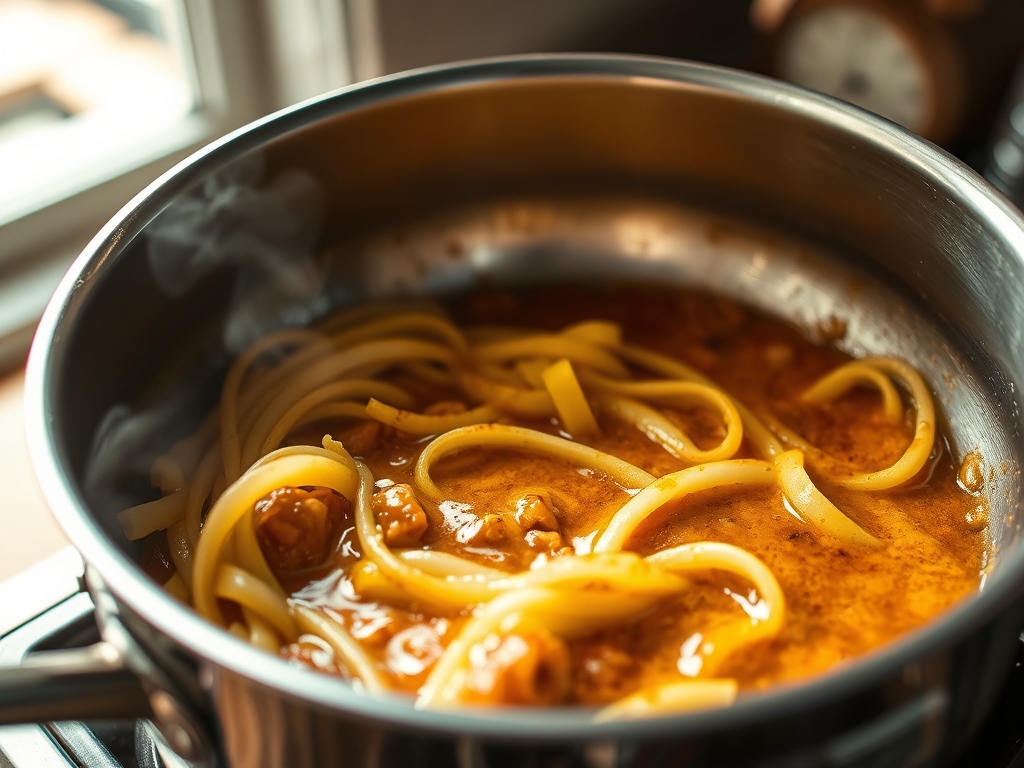
Begin by filling a large stockpot with filtered water. Do not eyeball the volume; use a graduated pitcher to ensure you have exactly one liter for every 100g of pasta. Bring this to a violent, rolling boil over maximum heat. This is not the time for a gentle simmer. You need the kinetic energy of the bubbles to keep the ribbons in constant motion.
Pro Tip: Use a digital scale to weigh your salt. The salinity of the water should mimic the Mediterranean Sea. This is your only chance to season the interior of the pasta via osmotic pressure.
2. The Ribbon Deployment
Introduce the fettuccine to the vortex. Do not break the strands. As the submerged ends soften, use a bench scraper or long tongs to gently guide the rest of the ribbons into the water. Immediately stir for the first 60 seconds. This prevents the initial starch release from acting like a glue that fuses the strands together.
Pro Tip: This stage is where you prevent "clumping." The mechanical action of stirring ensures that each ribbon is individually hydrated, maximizing the surface area available for the sauce later.
3. Monitoring the Al Dente Threshold
Begin testing the pasta two minutes before the package instructions suggest. You are looking for the "soul" of the pasta; a tiny, white pin-prick of unhydrated starch at the very center. The exterior should be supple, but the core must offer a distinct resistance to the incisors.
Pro Tip: Professional kitchens use a saucier to finish the pasta. Pull the fettuccine out of the water while it is still slightly undercooked. The residual heat and the subsequent "mantecatura" phase will finish the cooking process perfectly.
4. The Emulsion Bridge
Before draining, submerge a measuring cup into the pot to reserve the starchy water. Drain the pasta but do not rinse it. Rinsing is a cardinal sin; it strips away the starch needed to render a cohesive sauce. Return the pasta to the pan with the butter and a splash of the reserved water.
Pro Tip: Use a vigorous tossing motion to aerate the mixture. This creates a creamy, viscous coating that clings to every square millimeter of the fettuccine without the need for heavy cream.
Section B: Prep & Timing Fault-Lines:
The most common human error is the "Lag Time." If your pasta sits in a colander for more than 30 seconds, it begins to cool and the starches set, turning your ribbons into a singular, rubbery mass. To fix this, synchronize your sauce and pasta. The sauce should always be waiting for the pasta, never the other way around. If you find yourself running behind, keep the pasta in the boiling water and add a cup of cold water to the pot. This drops the temperature below the cooking threshold, effectively "pausing" the pasta for up to two minutes without turning it to mush.
THE VISUAL SPECTRUM
Section C: Thermal & Visual Troubleshooting:
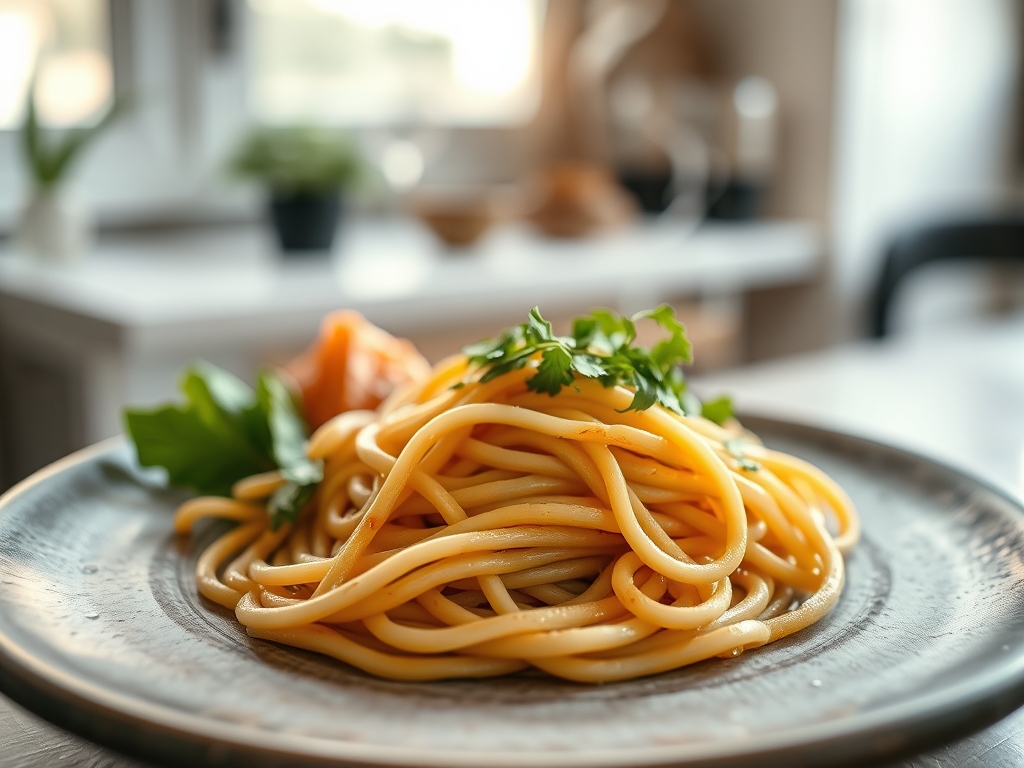
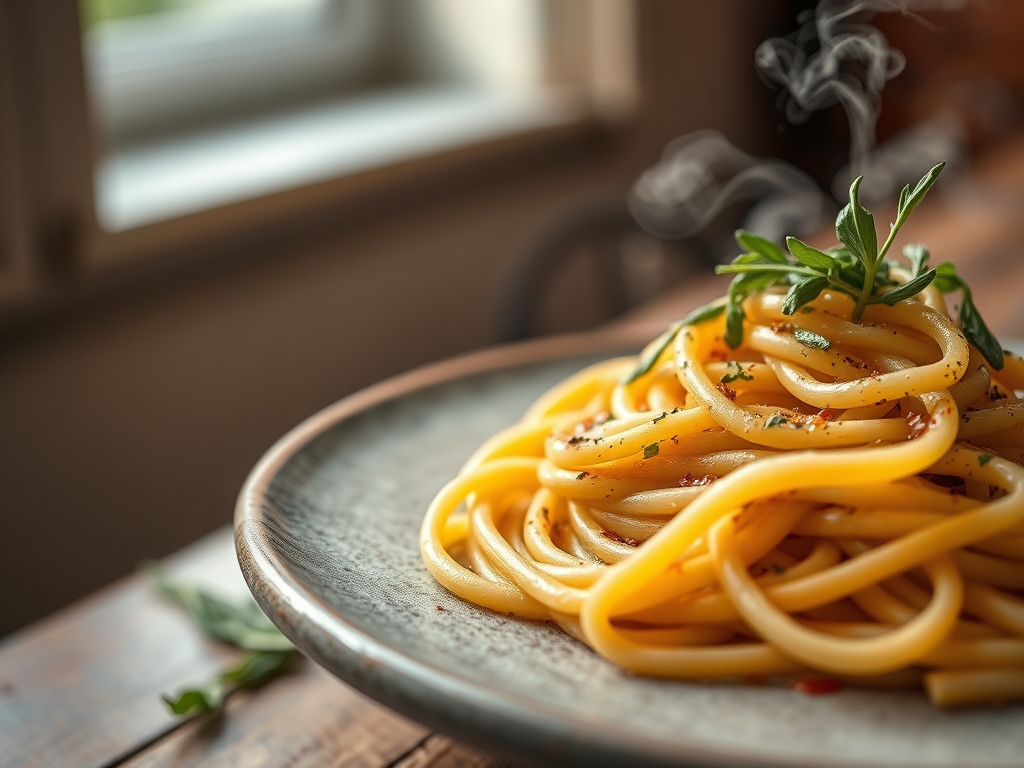
Referencing our masterclass photo, notice the "sheen" on the ribbons. This is not grease; it is a high-gloss emulsion. If your Boiled Fettuccine looks dull or matte, you have failed to incorporate enough starchy water and fat. The ribbons should look slippery and translucent at the edges. If the color is an uneven, blotchy yellow, it indicates that the pasta was crowded in the pot, preventing even heat distribution. Ensure your pot is large enough to allow the pasta to swim freely. Finally, if you see white "dusty" spots on the cooked ribbon, that is a sign of "white heart," meaning the core never reached the necessary temperature to gelatinize. Increase your heat and ensure a true rolling boil next time.
THE DEEP DIVE
Macro Nutrition Profile:
A standard serving of Boiled Fettuccine provides approximately 380 calories, 14g of protein, and 75g of complex carbohydrates. While it is a carb-dense fuel source, the low glycemic index of high-quality semolina provides sustained energy release rather than a quick spike.
Dietary Swaps:
- Vegan: Replace European butter with a high-quality extra virgin olive oil to infuse the pasta with polyphenols.
- Keto: Swap semolina for hearts of palm ribbons or konjac noodles. Note: These do not release starch, so you will need a thickener like xanthan gum to achieve a viscous sauce.
- Gluten-Free: Use brown rice fettuccine. Be warned: GF pasta has a very narrow "al dente" window and can disintegrate rapidly if overcooked by even 30 seconds.
Meal Prep & Reheating Science:
To maintain the molecular structure when reheating, undercook the pasta by three minutes during the initial boil. Shock it in ice water to stop the cooking, then coat lightly in oil. When ready to eat, "flash-boil" it for 60 seconds. This re-hydrates the starch without collapsing the gluten walls.
THE KITCHEN TABLE
Why is my pasta water cloudy?
Cloudy water is a victory. It means the pasta is releasing starch, which you will use to render your sauce into a silk-like emulsion. Never discard all of it.
Can I add oil to the boiling water?
No. Oil floats on top and does nothing to prevent sticking. Worse, it coats the pasta as you drain it, preventing your sauce from adhering to the surface.
How much salt is too much?
If the water tastes like a salt lick, you have gone too far. It should taste like a seasoned soup. Remember, most of that salt stays in the water.
What is the best tool for serving?
Use a pasta fork or long-handled tongs. This allows you to lift the ribbons and "twirl" them into a tight nest, which preserves internal thermal energy.