Imagine a protein so delicate it threatens to dissolve at the mere suggestion of a fork. This is the structural engineering of the sea. We are moving beyond the crude application of dry heat and entering the realm of gentle, lipid-rich immersion. When you analyze the Poached Cod Data, you find a fascinating intersection of cellular biology and fluid dynamics. The goal is to replace the water within the muscle fibers with a silky, aromatic milk bath, ensuring the albumin does not coagulate into those unsightly white beads. We are looking for a texture that is not just soft, but translucent and shimmering. This is a high-stakes operation where a single degree of temperature fluctuation can transform a masterpiece into a rubbery disappointment. We want to infuse the flesh with the piquant notes of peppercorns and the earthy depth of bay leaves while maintaining the structural integrity of the flake. Strap in; we are about to audit your kitchen's ability to handle the most sophisticated whitefish preparation in the culinary canon.
THE DATA MATRIX
| Metric | Specification |
|---|---|
| Prep Time | 15 Minutes |
| Execution Time | 12 Minutes |
| Yield | 4 Servings |
| Complexity (1-10) | 4 |
| Estimated Cost per Serving | $7.50 |
THE GATHERS
Ingredient Protocol:
- 700g / 1.5 lbs Fresh Atlantic Cod Fillets (thick-cut)
- 750ml / 3 cups Whole Milk (3.5 percent fat minimum)
- 2 cloves Garlic, smashed
- 1 small Shallot, thinly sliced
- 2 sprigs Fresh Thyme
- 10g / 2 tsp Black Peppercorns, whole
- 1 large Bay Leaf
- 5g / 1 tsp Sea Salt
- 30g / 2 tbsp Unsalted Butter
- 15ml / 1 tbsp Fresh Lemon Juice
Section A: Ingredient Quality Audit:
If your cod arrives with a fishy odor, the trimethylamine oxide has already begun its descent into decay. You cannot fix rot, but you can mitigate minor "fridge smells" by rinsing the fillets in cold water and patting them bone-dry with lint-free towels. If using frozen fish, the cell walls have likely been punctured by ice crystals. To fix this, brine the thawed fish in a 5 percent salt solution for 10 minutes to tighten the protein structure. For the poaching liquid, do not use skim milk. The lack of fat prevents the liquid from becoming sufficiently viscous to coat the fish, resulting in a watery, bland profile. If you only have low-fat milk, whisk in a tablespoon of heavy cream to stabilize the emulsion.
THE MASTERCLASS
1. Aromatics and Infusion
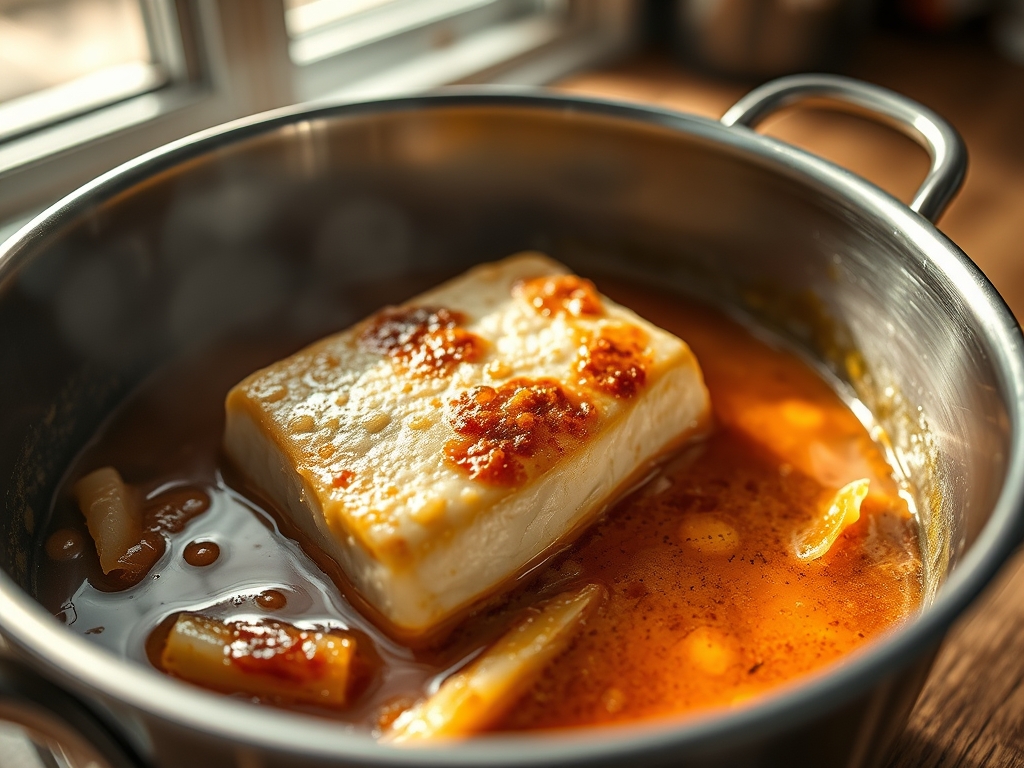
Place your saucier over medium-low heat and add the milk, garlic, shallot, thyme, peppercorns, and bay leaf. Bring the temperature to exactly 80 degrees Celsius (176 degrees Fahrenheit) using a digital probe thermometer. Do not allow the milk to reach a rolling boil, as this will cause the proteins to denature and the liquid to break.
Pro Tip: Infusing the milk before adding the fish allows the volatile oils from the aromatics to saturate the liquid. Using a saucier with rounded bottom edges ensures even heat distribution and prevents the milk from scorching in the corners.
2. The Submersion Phase
Season the cod fillets lightly with sea salt on all sides. Gently lower the fillets into the milk bath using a slotted spatula. The liquid should completely submerge the fish. If the fillets are peaking out, add a splash more milk or a bit of butter to raise the level.
Pro Tip: A digital scale is essential here to ensure your fillets are of uniform weight. Consistent mass leads to consistent thermal penetration. If one fillet is significantly thinner, it must be added to the pot three minutes after the thicker cuts.
3. Precision Thermal Control
Maintain the poaching liquid at a steady 75 to 80 degrees Celsius. The fish is done when it reaches an internal temperature of 54 degrees Celsius (130 degrees Fahrenheit). At this point, the flakes will begin to separate when pressed lightly with a bench scraper or the back of a spoon.
Pro Tip: This is the "low and slow" philosophy applied to seafood. By keeping the temperature below the boiling point, you prevent the muscle fibers from contracting violently, which is what squeezes out moisture and results in "tough" fish.
4. The Finishing Glaze
Carefully remove the cod from the milk and set it on a warm plate. Strain 100ml of the poaching liquid into a small pan, whisk in the cold butter and lemon juice to create a quick emulsion. Pour this piquant sauce over the fish immediately.
Pro Tip: Using cold butter for the sauce allows for better emulsification. The fat molecules coat the milk solids, creating a glossy, rich finish that clings to the delicate flakes of the cod.
Section B: Prep & Timing Fault-Lines:
The biggest failure in poaching is the "set it and forget it" mentality. If your milk reaches a boil, the cod will undergo rapid protein coagulation, turning it into a chalky mess. If you find the milk is skinning over, your heat is too high; whisk the surface gently to break the tension. Another common error is overcrowding the pan. If the fillets are touching, the heat cannot circulate, leading to unevenly cooked centers. Always ensure at least two centimeters of clearance between each piece of protein.
THE VISUAL SPECTRUM
Section C: Thermal & Visual Troubleshooting:
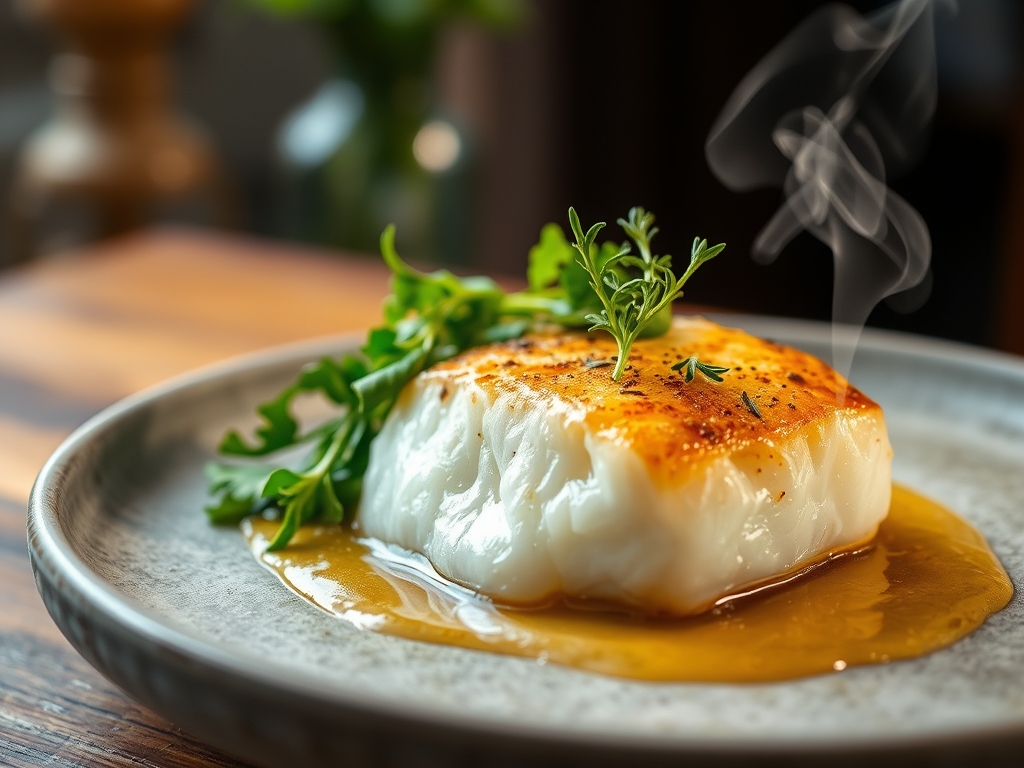
Analyze the Masterclass photo: notice the pearlescent sheen on the fish and the lack of white albumin on the surface. If your fish looks dull and opaque, it is overcooked. If you see white clumps floating in the milk, the heat was too aggressive. To fix a dull appearance, brush the fish with a small amount of melted butter or olive oil immediately after extraction to restore the luster. If the flakes are falling apart before they reach the plate, you likely handled the fish too much during the poaching process. Use a wide, flat fish spatula for all movements to preserve the infrastructure.
THE DEEP DIVE
Macro Nutrition Profile:
A standard serving of milk-poached cod provides approximately 35g of high-quality protein, 8g of fat (largely from the milk and butter), and 2g of carbohydrates. It is an exceptionally lean way to consume dense nutrients like Vitamin B12 and Selenium without the heavy caloric load of frying.
Dietary Swaps:
- Vegan: Replace cod with thick slabs of "Lion's Mane" mushroom and use unsweetened cashew milk with a touch of nutritional yeast for the poaching liquid.
- Keto: This recipe is naturally keto-compliant. Increase the butter content in the finishing sauce to boost healthy fats.
- Gluten-Free: No modifications needed; this is a naturally grain-free protocol.
Meal Prep & Reheating Science:
Reheating poached fish is a delicate operation. Do not use a microwave; the radiation will agitate water molecules and toughen the protein. Instead, place the cold fish in a shallow dish with a tablespoon of water or milk, cover tightly with foil, and warm in a 120 degree Celsius oven for 8 minutes. This preserves the molecular moisture and prevents the "rubbery" texture associated with leftover seafood.
THE KITCHEN TABLE
Why does my milk curdle during poaching?
Curdling usually happens if the heat is too high or if you added lemon juice too early. Acid and high heat cause milk proteins to clump. Always add citrus at the very end, off the heat.
Can I use frozen cod for this?
Yes, but the Poached Cod Data suggests a slight loss in texture. Thaw completely in the fridge and pat dry. Brining for 10 minutes in salt water will help restore the snap of the muscle fibers.
What is the best milk to use?
Whole milk is the gold standard. The fat content provides a protective barrier for the fish and creates a more luxurious mouthfeel. Non-dairy alternatives like coconut milk work but will drastically change the flavor profile.
How do I know the fish is done without a thermometer?
The "flake test" is your best bet. Gently press the thickest part of the fillet with a fork. If the layers slide apart easily and the center is no longer translucent, it is ready.
Can I reuse the poaching milk?
Technically yes, but it will have a strong fish flavor. It makes an excellent base for a seafood chowder or a white sauce for a fish pie. Strain it and freeze immediately.