
Listen up, kitchen operatives. We are moving beyond the amateurish realm of the backyard grill where casings are scorched into oblivion and the interior protein is rendered into sawdust. We are entering the world of precision thermal management. The subject of today's structural audit is the humble yet technically demanding world of Poached Sausages. When executed with the mindset of a culinary engineer, poaching is not just boiling; it is a controlled hydration process that preserves the delicate emulsion of fat and lean meat. We are looking for that specific, high-tension "snap" of the casing followed by a burst of succulent, perfectly seasoned juice. If your links look like shriveled leather or gray balloons, you have failed the audit. We are here to fix the infrastructure of your breakfast, lunch, and dinner. We are talking about achieving a uniform internal temperature while maintaining the integrity of the collagen wrap. This is where high-stakes physics meets the plate. Prepare your stations; the inspection begins now.
THE DATA MATRIX
| Metric | Specification |
|---|---|
| Prep Time | 10 Minutes |
| Execution Time | 20 Minutes |
| Yield | 4 Servings |
| Complexity (1-10) | 3 |
| Estimated Cost per Serving | $3.50 |
THE GATHERS
Ingredient Protocol:
- 8 Quality Links (Bratwurst, Italian, or Chorizo) / 680g
- 1 Large Yellow Onion, sliced thin / 150g
- 2 Cloves Garlic, smashed / 10g
- 12oz Craft Lager or Hard Cider / 355ml
- 2 cups Chicken or Vegetable Stock / 475ml
- 1 tbsp Black Peppercorns / 7g
- 2 Fresh Bay Leaves / 1g
- 1 tbsp Unsalted Butter / 14g
Section A: Ingredient Quality Audit:
The primary failure point in this protocol is the "leaking link." If you source sausages with air pockets or loose casings, they will rupture during the expansion phase. Technical Fix: Always inspect the structural integrity of the casing before purchase. If the meat appears gray or the fat has begun to render inside the package, the emulsion is already broken. To fix sub-par, overly lean sausages, add a tablespoon of high-quality lard or bacon grease to the poaching liquid to infuse the exterior with necessary lipids. If your aromatics lack potency, toast the peppercorns in a dry saucier before adding liquids to aerate the volatile oils.
THE MASTERCLASS
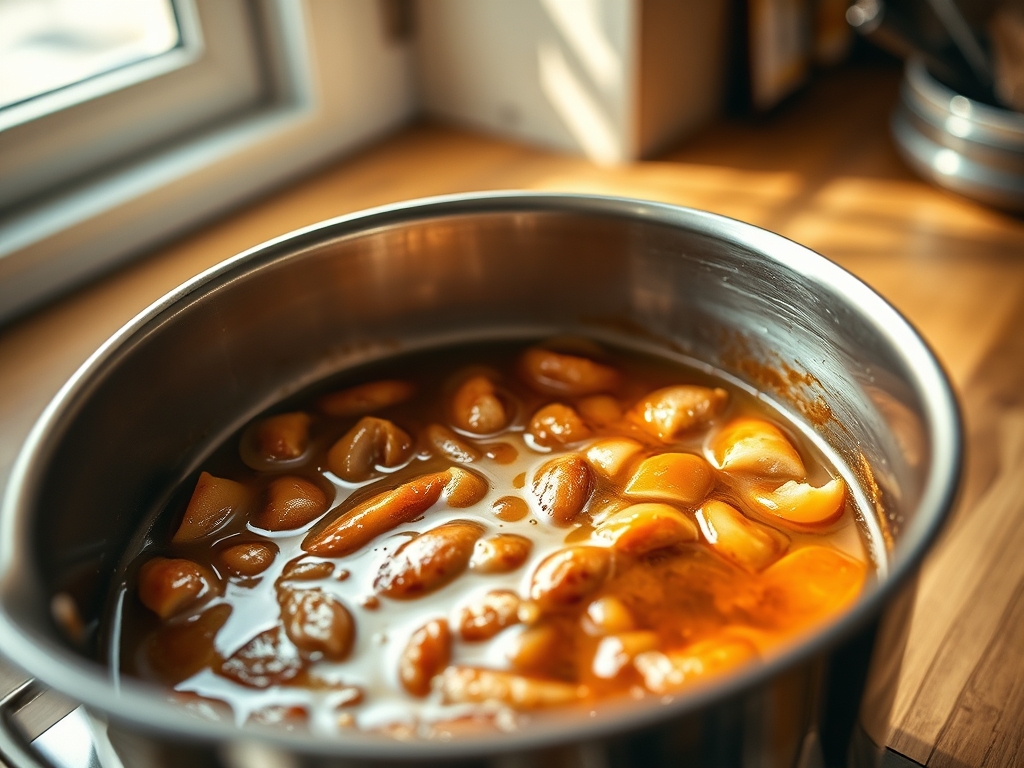
1. The Liquid Infrastructure
Combine your stock, beer, onion, garlic, and spices into a heavy-bottomed saucier. Bring the mixture to a gentle simmer, never a rolling boil. You are creating a flavorful environment that will prevent the salt in the meat from leaching out into the water.
Pro Tip: Use a digital scale to ensure your salt-to-liquid ratio is precise. The goal is to create an isotonic environment where the osmotic pressure is balanced; this prevents the sausages from swelling and bursting their casings.
2. Submersion and Thermal Regulation
Carefully lower the links into the liquid using silicone-tipped tongs. Ensure they are fully submerged. Adjust the heat to maintain a temperature between 160F and 170F (71C to 76C).
Pro Tip: Use an instant-read probe thermometer to monitor the liquid. If the water exceeds 180F, the collagen in the casing will shrink too rapidly while the interior meat expands, leading to a catastrophic structural failure of the link.
3. The Poaching Interval
Cover the pan partially and poach for 10 to 12 minutes. The sausages are technically cooked when they reach an internal temperature of 155F (68C). They will continue to carry over cook during the searing phase.
Pro Tip: Professional chefs use a bench scraper to keep the workspace clear of onion debris during this phase. Maintaining a clean "hot zone" prevents cross-contamination and ensures you can move quickly to the finishing stage.
4. The Maillard Finish
Remove the links and pat them bone-dry with paper towels. Empty the liquid (reserve the onions) and return the pan to medium-high heat with a pat of butter. Sear the sausages for 2 minutes per side until the skin is golden and taut.
Pro Tip: Moisture is the enemy of the Maillard reaction. If the casing is wet, it will steam rather than crisp. A perfectly dry casing ensures a viscous, caramelized exterior that provides the essential "snap" upon the first bite.
Section B: Prep & Timing Fault-Lines:
The most common human error is the "boil and forget" syndrome. High heat causes the fat to separate from the protein, resulting in a grainy, dry texture. Technical Fix: If you realize your liquid has reached a hard boil, immediately add a half-cup of cold water or an ice cube to drop the temperature. If your timing is off and the sausages are ready before the rest of the meal, store them in a warm (140F) liquid bath rather than letting them sit in the open air, which causes the skins to become tough and "plasticky."
THE VISUAL SPECTRUM
Section C: Thermal & Visual Troubleshooting:
Referencing the Masterclass photo above, note the uniform golden-brown hue and the absence of shriveling. If your links appear pale or "anemic," your searing pan was not hot enough or you failed to pat the meat dry. If the skins are splitting, your poaching temperature was too high. A dull, matte finish indicates a lack of fat during the sear; deglaze the pan with a splash of the poaching liquid and a knob of butter to create a piquant glaze that coats the links. If the onions are charred instead of translucent, they were not properly submerged during the poaching phase.
THE DEEP DIVE
Macro Nutrition Profile:
A standard serving of two poached and seared links provides approximately 28g of protein, 34g of fat, and 4g of carbohydrates. The poaching method is superior to deep-frying as it allows some of the rendered surface fat to exit into the liquid rather than being re-absorbed.
Dietary Swaps:
- Vegan: Use high-quality plant-based links and vegetable stock. Reduce poaching time by 30% as plant proteins lack the same connective tissue.
- Keto: Replace beer with additional bone broth and a splash of apple cider vinegar to maintain acidity.
- GF: Ensure the sausage filler is grain-free and use a gluten-free lager or hard cider.
Meal Prep & Reheating Science:
To maintain molecular structure during reheating, do not use a microwave. Microwaves vibrate water molecules, which will steam the sausage from the inside out and ruin the casing snap. Instead, reheat in a covered skillet with two tablespoons of water over medium heat. This creates a mini-steamer that restores the internal moisture without overcooking the exterior.
THE KITCHEN TABLE
Why did my sausages burst?
The poaching liquid was too hot. Rapid boiling causes the internal juices to expand faster than the casing can stretch. Maintain a gentle simmer at 165F to ensure structural integrity and a juicy interior.
Can I use water instead of stock?
You can, but you lose an opportunity to build flavor. Water is a solvent that pulls flavor out of the meat. Using stock or beer creates a flavor-neutral or flavor-positive environment for the links.
Do I need to prick the skins?
Absolutely not. Pricking the skins allows the pressurized juices to escape, leading to a dry and flavorless sausage. Trust the thermal regulation of the poaching method to keep the casings intact without venting.
How do I know they are done?
Use a digital thermometer to find an internal temperature of 160F. Visual cues include a firm texture when pressed and a casing that has transitioned from translucent to opaque and taut.