Imagine a structural failure at the center of your plate. You have seen it before; a beautiful piece of fish reduced to a chalky, fibrous mess that resembles wet insulation more than a luxury protein. We are here to prevent that tragedy through the rigorous application of thermal dynamics and moisture retention. Poached Halibut is not merely a meal; it is a delicate exercise in maintaining myofibrillar density while navigating the narrow window between raw translucency and overcooked ruin. Halibut is a lean, mean, swimming machine with very little intramuscular fat to buffer against heat. If you treat it with the blunt force of a broiler, you lose. If you treat it with the precision of a liquid immersion bath, you win. We are looking for a texture that is silky, ivory-white, and capable of flaking into large, succulent shards under the slightest pressure of a silver fork. Prepare your station. We are moving from culinary chaos to infrastructure excellence.
THE DATA MATRIX
| Metric | Specification |
|---|---|
| Prep Time | 20 Minutes |
| Execution Time | 15 Minutes |
| Yield | 4 Servings |
| Complexity | 6 / 10 |
| Estimated Cost per Serving | $18.00 – $22.00 |
THE GATHERS
Ingredient Protocol:
- 800g / 1.75 lbs Fresh Halibut Fillets (cut into four equal portions)
- 500ml / 2 cups Dry White Wine (Sauvignon Blanc or Pinot Grigio)
- 250ml / 1 cup Fish Stock or Vegetable Broth
- 115g / 0.5 cup Unsalted Butter (cubed and chilled)
- 2 Large Shallots (minced)
- 3 Garlic Cloves (smashed)
- 5g / 1 tsp Black Peppercorns
- 2 Bay Leaves
- 10g / 2 tbsp Fresh Parsley (finely chopped)
- 5g / 1 tsp Flaky Sea Salt
Section A: Ingredient Quality Audit:
The primary failure point in Poached Halibut is the age of the protein. If your fish smells like the pier at low tide, the trimethylamine levels are too high; no amount of aromatics will save it. Ensure the flesh is firm and springs back when poked. If the halibut was previously frozen, it likely suffered ice crystal damage to its cellular walls. To fix this, brine the fish in a 5% salt solution for 10 minutes before cooking. This helps to reorganize the protein structure and prevents the unappealing white albumin from leaking out during the poach. If your white wine is too acidic or "corked," it will impart a piquant bitterness that ruins the delicate sweetness of the fish. Always use a wine you would actually drink.
THE MASTERCLASS
1. Construct the Aromatics Base
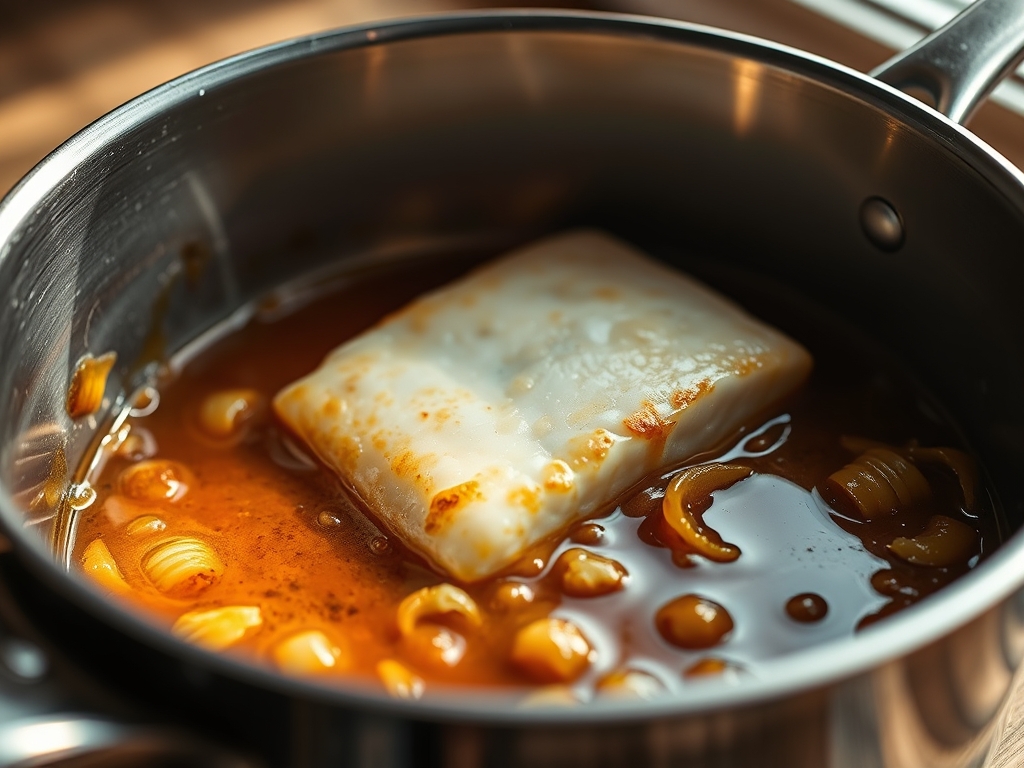
Place your saucier over medium heat and melt a small knob of butter. Add the minced shallots and smashed garlic. Sweat them until they are translucent but not browned. We are looking to infuse the fat with sulfurous depth without introducing the bitter notes of caramelization.
Pro Tip: Use a digital scale to measure your aromatics. Consistency in the base ensures the flavor profile remains balanced and does not overwhelm the mild halibut.
2. Establish the Liquid Infrastructure
Pour in the white wine and fish stock. Add the bay leaves and peppercorns. Bring the mixture to a gentle simmer, then reduce the heat to low. The liquid should be "shivering," not boiling. A violent boil will tear the delicate fish fibers apart.
Pro Tip: Use a thermometer to verify the liquid is between 160F and 170F (71C – 76C). This temperature range ensures a slow, even cook that preserves the viscous mouthfeel of the fish.
3. The Immersion Phase
Season the halibut fillets with sea salt and carefully lower them into the liquid. The liquid should ideally come halfway up the sides of the fish. Cover the pan with a tight-fitting lid or a cartouche (a parchment paper circle) to trap the steam.
Pro Tip: A bench scraper is excellent for lifting the fillets into the pan without breaking them. The lid creates a pressurized steam environment that cooks the top of the fish while the bottom poaches.
4. Emulsify the Finishing Sauce
Once the fish reaches an internal temperature of 130F (54C), remove it from the pan and tent it with foil. Turn the heat to high and reduce the poaching liquid by half. Whisk in the remaining cold butter one cube at a time to create a beurre blanc style emulsion.
Pro Tip: Moving the pan in a circular motion while whisking helps to aerate the sauce, creating a light, velvety texture that coats the back of a spoon.
Section B: Prep & Timing Fault-Lines:
The most common human error is the "carry-over" effect. Halibut continues to cook for several minutes after being removed from the heat. If you wait until the fish looks "done" in the pan, it will be dry by the time it reaches the table. Pull the fish when it is still slightly translucent in the very center. Another timing error involves the sauce reduction. If you reduce the liquid too slowly, the aromatics become mushy. Keep the heat high and the whisk moving to maintain the structural integrity of the emulsion.
THE VISUAL SPECTRUM
Section C: Thermal & Visual Troubleshooting:
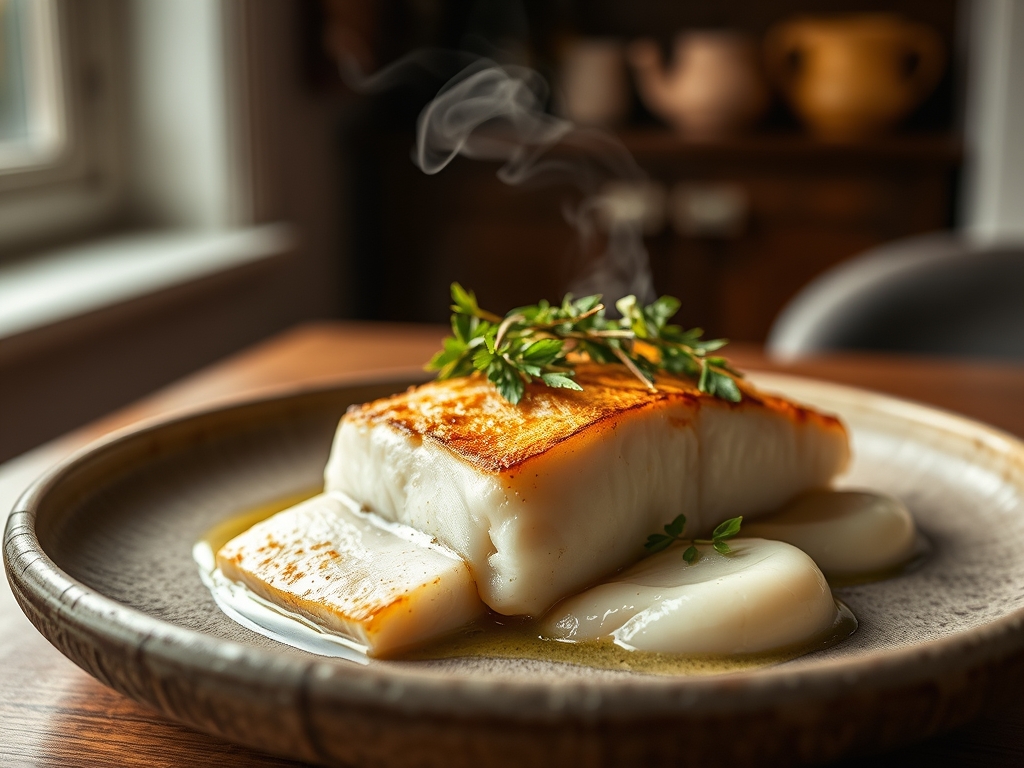
Referencing the Masterclass photo, your Poached Halibut should exhibit a pristine, matte-white finish. If the surface looks dull or grey, your poaching liquid was likely too acidic or the fish was submerged too long. If you see white "beads" on the surface, that is albumin; it means the heat was too high. To fix a dull appearance, glaze the fish immediately with the reduced butter sauce to add a reflective sheen. If the flakes are falling apart before you plate them, your knife skills during the raw prep were likely jagged. Use a very sharp fillet knife to ensure clean, structural lines that hold up under the weight of the sauce.
THE DEEP DIVE
Macro Nutrition Profile
A standard serving of Poached Halibut provides approximately 35g of high-quality protein with only 5g of fat (prior to the butter sauce). It is rich in magnesium, potassium, and selenium. By poaching instead of frying, you avoid the render of healthy Omega-3 fatty acids, keeping them locked within the myofibrillar structure.
Dietary Swaps
- Vegan: Replace halibut with thick slabs of "King Oyster Mushroom" or "Celery Root." Substitute butter with a high-quality vegan oil-based spread and use vegetable dashi instead of fish stock.
- Keto: This dish is naturally keto-compliant. Increase the butter ratio in the final sauce for higher fat macros.
- GF: Ensure your fish stock is certified gluten-free, as some commercial bases use flour as a thickener.
Meal Prep & Reheating Science
Halibut is notorious for becoming rubbery when reheated. To maintain the molecular structure, do not use a microwave. Instead, place the leftover fish in a shallow dish with a splash of water or stock, cover tightly with foil, and warm in a 275F (135C) oven for 10 minutes. This gentle "re-poaching" prevents the proteins from tightening and squeezing out their internal moisture.
THE KITCHEN TABLE
How do I know the halibut is perfectly cooked?
Use a cake tester or a thin metal skewer. Insert it into the thickest part of the fillet for three seconds, then touch it to your bottom lip. It should feel warm, not hot. The fish should yield to gentle pressure.
Can I poach halibut in olive oil instead?
Absolutely. Oil poaching provides an even denser, more luxurious texture because the oil does not penetrate the fish as water-based liquids do. Keep the oil temperature strictly at 120F (49C) for a confit-style result that is incredibly tender.
Why did my sauce break and turn oily?
The sauce broke because the temperature was too high when you added the butter, or you added it too fast. To fix a broken emulsion, whisk in a teaspoon of heavy cream or a splash of cold water to re-stabilize.
What are the best sides for this infrastructure?
You need a contrast in texture. Consider blanched asparagus for a snap or a smooth parsnip puree to echo the creaminess of the sauce. Avoid anything too crunchy or aggressive that might overshadow the delicate halibut.