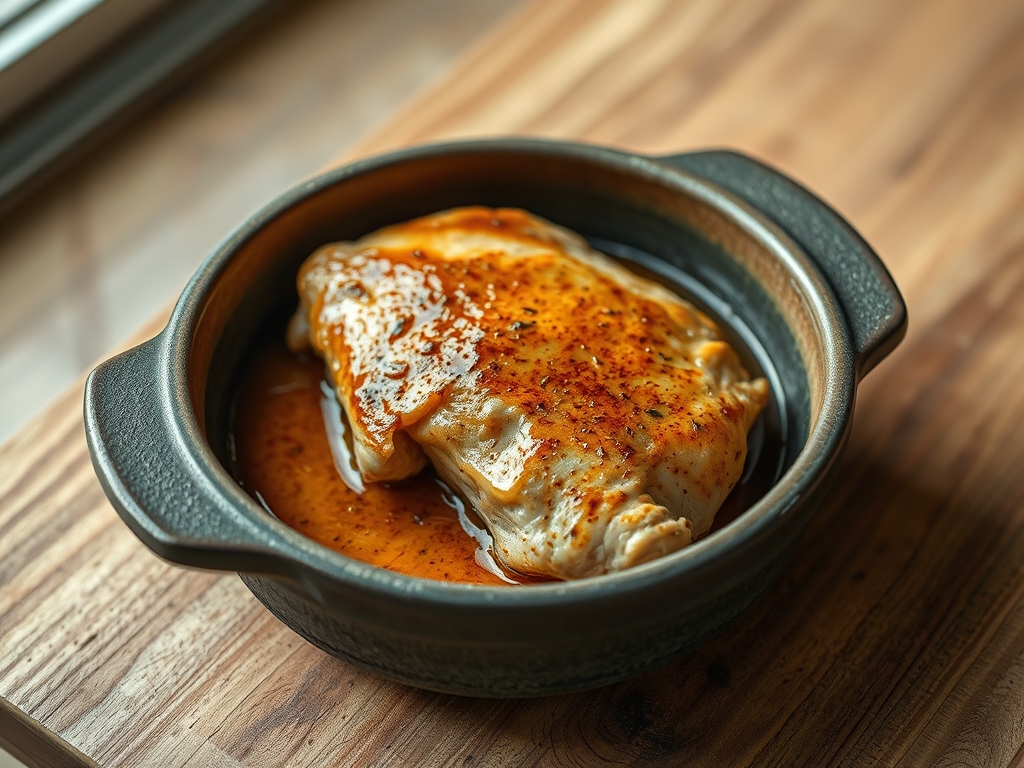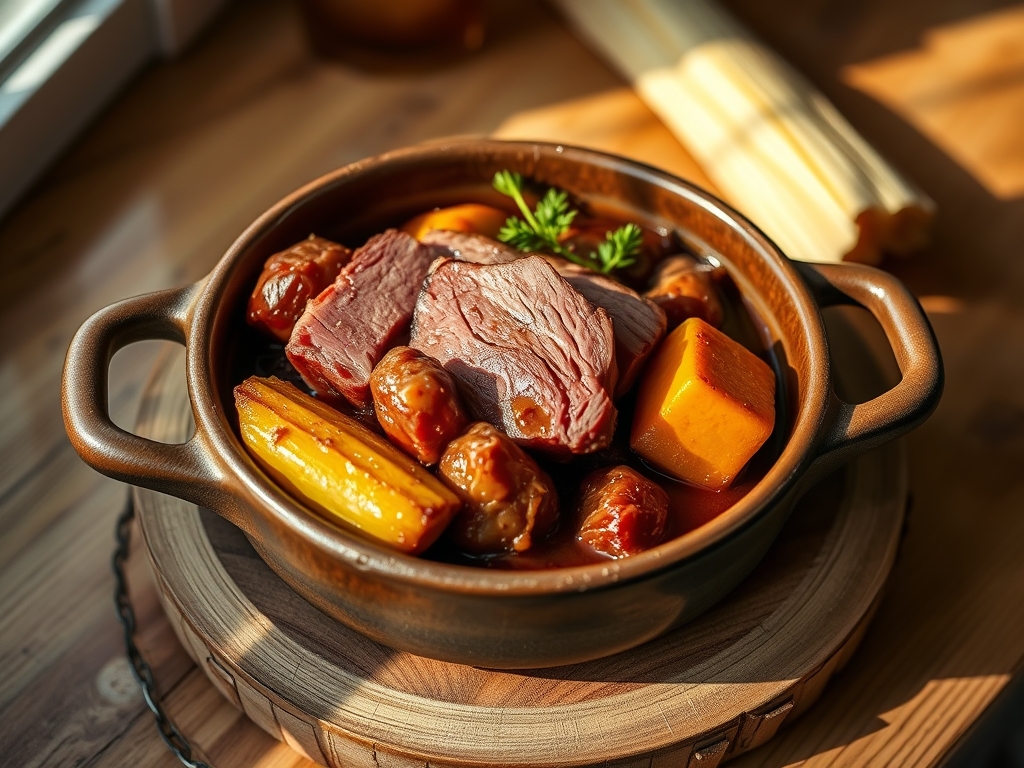
Stop thinking about the lukewarm deli slices of your childhood. We are entering the realm of industrial-grade culinary physics where the humble leg of pork is transformed through precise thermal saturation. To the uninitiated, it is just a pot of water; to the expert auditor, it is a high-stakes environment of osmotic pressure and collagen denaturation. We are here to analyze the Boiled Ham Data, a set of metrics that separates the soggy amateur from the master of moisture retention. When you plunge a salt-cured gammon into a simmering aromatic bath, you are initiating a complex sequence of protein tightening and fat softening. The goal is a texture that is firm yet yielding, a profile that is salty yet nuanced by the infuse of aromatics. This is not just cooking; it is a structural audit of a biological specimen. We are looking for the perfect equilibrium where the meat remains succulent while the connective tissue dissolves into a silk-like gelatin. Let us break down the metrics.
THE DATA MATRIX
| Metric | Specification |
|---|---|
| Prep Time | 20 Minutes (Excluding Soak) |
| Execution Time | 20 Minutes per 500g |
| Yield | 8 to 12 Servings |
| Complexity (1-10) | 4 |
| Estimated Cost per Serving | $1.85 |
THE GATHERS
Ingredient Protocol:
- 2.5kg / 5.5lb Uncooked Smoked or Unsmoked Gammon Joint
- 2 Large Carrots (roughly chopped)
- 2 Stalks Celery (roughly chopped)
- 1 Large Onion (halved with skin on)
- 10ml / 2 tsp Black Peppercorns
- 3 Large Bay Leaves
- 500ml / 2 cups Hard Apple Cider (optional for acidity)
- Cold Water (sufficient to submerge the specimen)
Section A: Ingredient Quality Audit:
The primary failure point in ham production is the initial salt concentration. If your raw material is excessively salty, the final product will be inedible regardless of your thermal precision. To fix this, perform a "Cold Water Extraction" by soaking the ham for 12 to 24 hours prior to the audit, changing the water every 6 hours. If the meat feels "mushy" before cooking, it indicates poor cellular integrity from over-processing. You can mitigate this by adding 5g of calcium chloride to the soaking liquid to firm up the pectin structures in the aromatics, though the meat itself requires a steady, low-temperature climb to maintain its shape.
THE MASTERCLASS
Step 1: The Cold Start Submersion
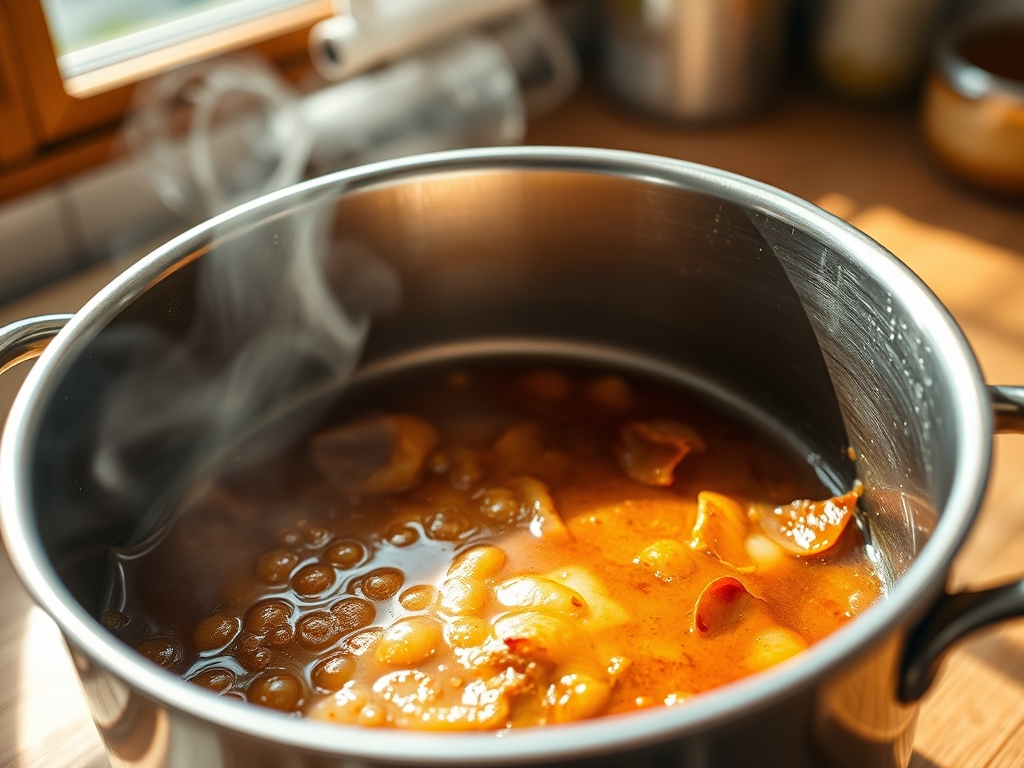
Place the gammon into a heavy-bottomed stockpot or a professional-grade saucier if the cut is small enough. Cover with cold water and the apple cider. Starting with cold water allows the proteins to heat gradually, preventing the exterior from toughening before the core reaches the target temperature.
Pro Tip: Use a digital scale to weigh your ham before submersion. The Boiled Ham Data suggests that precise weight dictates the exact "Thermal Saturation Point," ensuring you do not overcook the delicate lean fibers.
Step 2: Aromatic Integration
Add the carrots, celery, onion, peppercorns, and bay leaves. These elements do not just flavor the meat; they create a viscous poaching liquid that manages the surface tension of the boiling water. The onion skin provides a deep amber hue to the rind.
Pro Tip: Use a bench scraper to efficiently transfer your mirepoix from the cutting board to the pot. Keeping the aromatics in large chunks prevents them from disintegrating into a sludge that clings to the meat.
Step 3: The Gentle Simmer
Bring the liquid to a boil, then immediately reduce the heat to a "lazy bubble." You are looking for a temperature range of 85C to 90C. Skim any grey foam that rises to the surface using a fine-mesh skimmer to ensure a clean finish.
Pro Tip: High heat is the enemy of the Boiled Ham Data. Rapid boiling causes the muscle fibers to contract violently, squeezing out the internal juices and leaving you with a dry, stringy mess.
Step 4: The Internal Equilibrium
Cook for 20 minutes per 500g. Use a probe thermometer to check the internal temperature; you are aiming for 68C (155F). Once reached, remove the pot from the heat and allow the ham to sit in the liquid for an additional 30 minutes.
Pro Tip: This "Carryover Saturation" phase allows the muscle fibers to relax and reabsorb the piquant poaching liquid, significantly increasing your final yield weight.
Section B: Prep & Timing Fault-Lines:
The most common human error is the "Thermal Spike." If you see the water rolling violently, you have already compromised the moisture barrier. If the ham is undercooked, do not attempt to "flash boil" it to finish. Instead, maintain the low simmer and check the core every 10 minutes. Timing is a suggestion; the internal probe is the law.
THE VISUAL SPECTRUM
Section C: Thermal & Visual Troubleshooting:
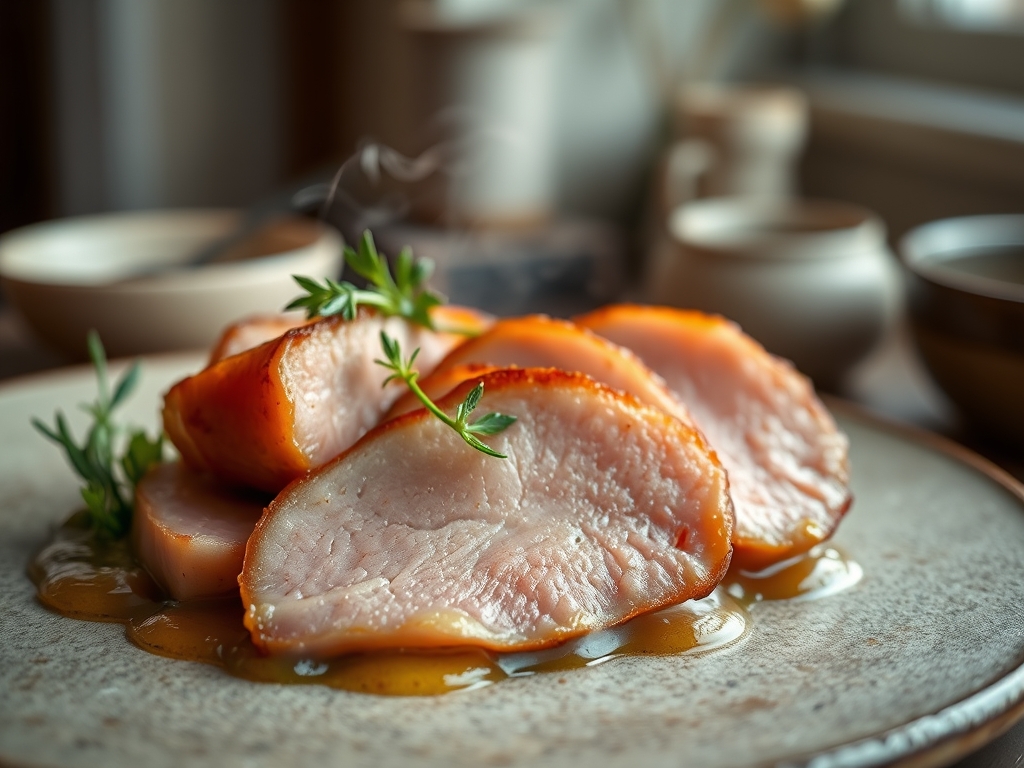
Review the Masterclass photo above. Note the consistent, pale pink hue of the interior meat and the translucent quality of the fat cap. If your ham appears grey, it indicates a lack of nitrates in the cure or an over-extended boiling time. If the fat is opaque and rubbery, the thermal energy did not penetrate deep enough to render the lipids. Uneven browning on the exterior (if glazed later) usually stems from failing to pat the meat dry after the boil. Use a lint-free kitchen towel to remove all surface moisture before any high-heat finishing steps.
THE DEEP DIVE
Macro Nutrition Profile
A standard 100g serving of this audited ham provides approximately 180 calories, 25g of protein, and 8g of fat. It is a high-density protein source, though the sodium content remains a significant metric to monitor for those with cardiovascular constraints.
Dietary Swaps
- Vegan: Replace the pork with a large "Seitan Log" wrapped in cheesecloth. Reduce the simmer time by 50% to avoid a rubbery texture.
- Keto: This recipe is naturally keto-compliant. Avoid adding sugar or honey to the poaching liquid.
- GF: Ensure your ham is certified gluten-free, as some commercial brines use grain-derived thickeners.
Meal Prep & Reheating Science
To maintain the molecular structure during storage, slice the ham only when cold. Reheating should be done "Low and Slow" in a vacuum-sealed bag or covered with a splash of the reserved poaching liquid to prevent the render of remaining fats, which leads to a dry mouthfeel.
THE KITCHEN TABLE
How do I stop the ham from falling apart?
Maintain a sub-boil temperature. Violent bubbles act like mechanical hammers against the protein bonds. Keep the heat low and use a heavy lid to stabilize the internal environment of the pot.
Can I use the leftover liquid?
Absolutely. This liquid is "Liquid Gold" in the Boiled Ham Data. It is a concentrated stock perfect for pea soup or risotto. However, taste it first; if it is too salty, dilute it with fresh water.
Why is my ham dry even though it was boiled?
You likely exceeded the 72C internal temperature threshold. Once the proteins bridge too tightly, they expel all moisture. Always use a probe thermometer to catch the ham at 68C.
Is it better to leave the skin on?
Yes. The skin and fat layer act as an insulator during the thermal saturation process. It protects the lean meat from direct heat and adds a viscous richness to the poaching medium.