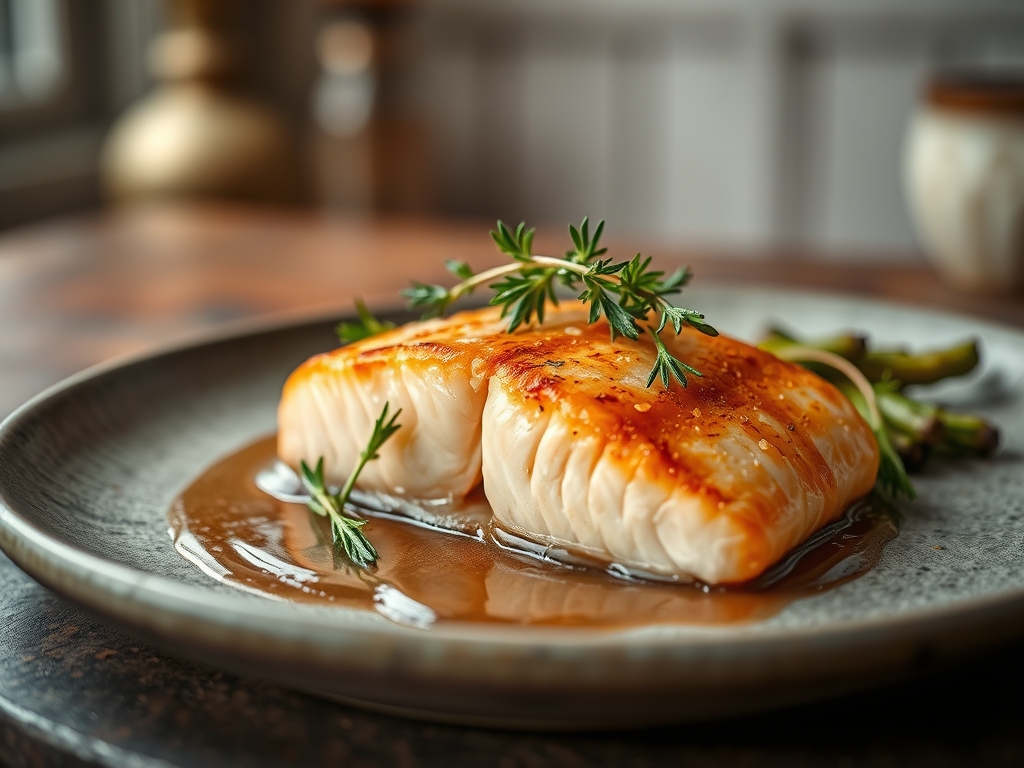
Stop treating your protein like a piece of structural steel in a blast furnace. Most home cooks approach the stove with the aggression of a demolition crew; they sear, they char, and they wonder why their expensive seafood has the texture of a sun-dried eraser. We are here to discuss the delicate art of lipid retention. When you prepare a Poached Salmon Fillet, you are not merely cooking; you are managing a fragile biological system of fats and proteins. The goal is a texture so silken it borders on the erotic. We want a fillet that flakes under the mere suggestion of a fork, shimmering with its own internal oils rather than being drowned in a heavy sauce. This is precision engineering applied to the culinary arts. We are utilizing a low-temperature liquid environment to ensure that the albumin does not coagulate into those unsightly white clumps. We are aiming for a translucent, coral-pink interior that vibrates with flavor. Welcome to the laboratory of the simmer.
THE DATA MATRIX
| Metric | Specification |
|---|---|
| Prep Time | 15 Minutes |
| Execution Time | 12 Minutes |
| Yield | 4 Servings |
| Complexity | 4 / 10 |
| Estimated Cost per Serving | $8.50 – $12.00 |
THE GATHERS
Ingredient Protocol:
- 4 Center-cut Salmon Fillets (approx. 170g / 6oz each)
- 750ml / 3 cups Vegetable or Fish Stock
- 250ml / 1 cup Dry White Wine (Sauvignon Blanc or Pinot Grigio)
- 1 Large Shallot, thinly sliced (approx. 40g / 1.4oz)
- 1 Lemon, sliced into rounds
- 5g / 1 tsp Black Peppercorns, whole
- 2 Bay Leaves, dried
- 15g / 0.5oz Fresh Dill sprigs
- 10g / 0.35oz Kosher Salt (for the poaching liquid)
Section A: Ingredient Quality Audit:
If your salmon smells like the underside of a pier at low tide, abort the mission immediately. Freshness is the only variable that cannot be corrected by technique. If the flesh is "gapping" or separating before it hits the pan, the cellular structure has already degraded. To fix a lack of aromatics, do not simply add more salt. Instead, infuse your poaching liquid with a higher concentration of acidic elements like lemon zest or a splash of verjus to brighten the profile. If your stock is too salty, dilute it with 125ml / 0.5 cup of filtered water to prevent the fish from becoming a salt lick.
THE MASTERCLASS
1. Constructing the Aromatics Base
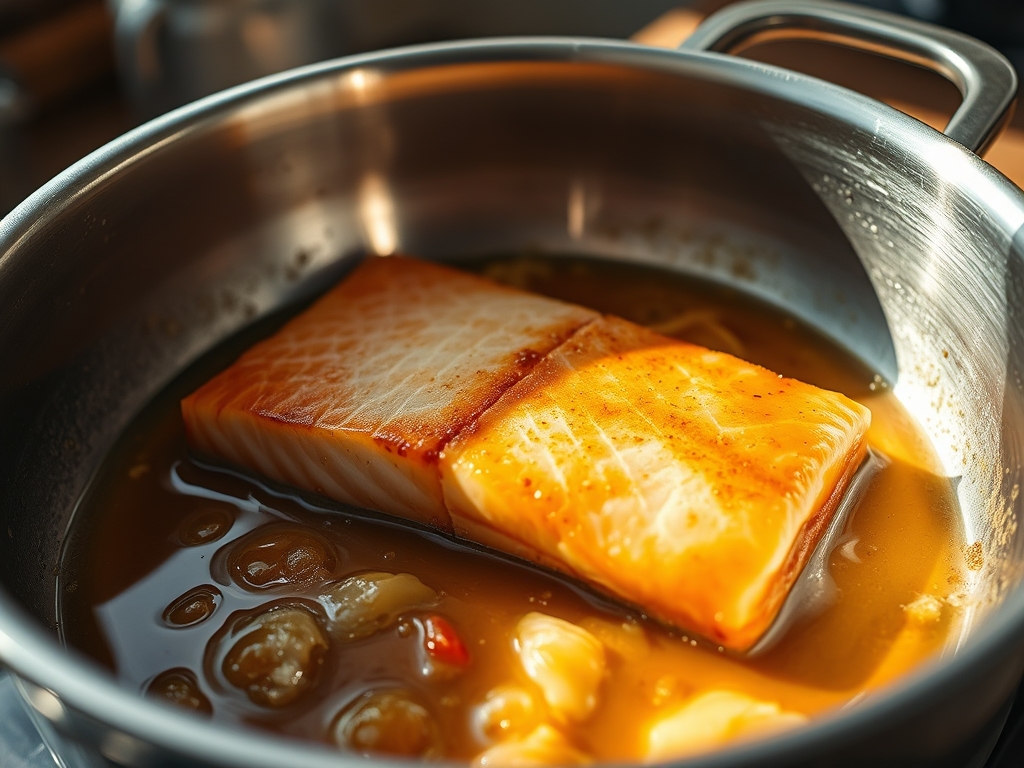
Place your sliced shallots, lemon rounds, peppercorns, bay leaves, and dill into a wide saucier or a deep straight-sided skillet. Pour in the stock and wine. Set your induction cooktop or gas burner to medium-high to bring the liquid to a gentle simmer. Do not allow it to reach a rolling boil; we are looking for "lazy bubbles" that barely break the surface.
Pro Tip: Using a saucier with rounded bottom edges allows for better thermal circulation of the poaching liquid. The science here is simple: we are creating a flavored bath that will infuse the fish with piquant notes while preventing moisture loss through evaporation.
2. Calibrating the Thermal Environment
Once the liquid reaches a simmer, reduce the heat to the lowest setting. Use a digital thermometer to verify the liquid is between 71C and 76C (160F to 170F). This is the "Goldilocks Zone" for fish protein. If the temperature is too high, the muscle fibers will contract violently and squeeze out the precious fats.
Pro Tip: Maintaining this specific temperature range prevents the rapid coagulation of albumin. This is the white protein that often leaks out of salmon. By keeping the heat low, you keep the albumin inside the flakes, resulting in a cleaner, more professional presentation.
3. The Submersion Phase
Gently lower the Poached Salmon Fillet into the liquid using a fish spatula. The liquid should just barely cover the top of the fish. If it does not, add a small amount of warm water. Cover the pan with a tight-fitting lid to trap the steam and ensure the top of the fillet cooks at the same rate as the bottom.
Pro Tip: A fish spatula is essential here because its long, flexible blade supports the entire length of the fillet. This prevents the fish from snapping under its own weight as the connective tissues begin to soften.
4. The Precision Extraction
Poach the fish for 8 to 12 minutes depending on thickness. Start checking for doneness at the 7-minute mark. Use your digital thermometer to check the internal temperature; you are aiming for 52C (125F) for a perfect medium-rare. The center should still look slightly translucent.
Pro Tip: Carry-over cooking is a real physical phenomenon. The internal temperature will rise by about 2 to 3 degrees after you remove the fish from the liquid. Pulling it early ensures the final result is viscous and tender rather than chalky.
5. The Finishing Polish
Lift the fillets out of the liquid and place them on a clean plate lined with a paper towel to blot excess moisture. Use a bench scraper to neatly transfer them to serving plates if you are aiming for a high-end architectural plating. Garnish with fresh dill and a light drizzle of extra virgin olive oil to add a final layer of lipid richness.
Pro Tip: Blotting the fish is a critical step often missed by amateurs. Excess poaching liquid on the plate will dilute any accompanying sauces and ruin the visual "cleanliness" of the dish.
Section B: Prep & Timing Fault-Lines:
The most common failure is the "Boil Blunder." If you see the liquid churning, you have already failed. High heat causes the exterior of the salmon to overcook while the interior remains raw. If you find yourself in this situation, immediately add a few ice cubes to the liquid to drop the temperature and move the pan off the heat source. Another timing error is prepping the fish too far in advance; keep the salmon refrigerated until the very moment the poaching liquid is calibrated.
THE VISUAL SPECTRUM
Section C: Thermal & Visual Troubleshooting:
Look at the Masterclass photo above. Notice the vibrant, consistent coral hue and the absence of white albumin streaks. If your salmon looks "dusty" or pale, you likely overcooked it or used a poaching liquid that lacked enough acidity to keep the colors bright. If the edges are curling, your heat was too high, causing the skin-side collagen to shrink too fast. To fix a dull appearance, brush the finished fillet with a light glaze of reduced poaching liquid or a high-quality oil to aerate the surface light reflection.
THE DEEP DIVE
Macro Nutrition Profile:
A standard 170g portion of Poached Salmon Fillet provides approximately 350 calories, 34g of high-quality protein, and 22g of heart-healthy fats, including those vital Omega-3 fatty acids. Because we are poaching rather than frying, we add zero supplemental fats during the cooking process, making this a metabolic powerhouse.
Dietary Swaps:
- Vegan: Replace the salmon with thick-cut "steaks" of cauliflower or firm tofu. Use a vegetable-based dashi for the poaching liquid to maintain umami.
- Keto: This dish is naturally keto-compliant. Increase the fat content by serving with a side of lemon-butter emulsion or hollandaise.
- GF: The recipe is naturally gluten-free. Ensure your vegetable stock is certified GF to avoid hidden thickeners.
Meal Prep & Reheating Science:
Salmon is notorious for reheating poorly. To maintain the molecular structure, do not use a microwave. Instead, place the cold fillet in a shallow dish with two tablespoons of water, cover tightly with foil, and warm in a 135C (275F) oven for 8 minutes. This creates a mini-steam chamber that prevents the fats from turning rancid.
THE KITCHEN TABLE
Why is my salmon white on the outside?
That is albumin, a protein that escapes when the muscle fibers contract too quickly. It is harmless but indicates the heat was too high. Keep your poaching liquid at a gentle shimmer to prevent this.
Can I use frozen salmon for poaching?
Yes, but thaw it completely in the refrigerator first. Poaching frozen fish directly results in uneven cooking, where the outside becomes rubbery before the center even begins to warm.
What is the best wine for the poaching liquid?
Use a dry, high-acid white wine like Sauvignon Blanc. Avoid oaked Chardonnays; the tannins and vanilla notes do not play well with the delicate fats of the fish.
How do I know the fish is done without a thermometer?
Press the thickest part of the fillet gently. If it yields easily and the flakes begin to separate, it is ready. If it feels firm or bouncy, it is overdone.
Should I leave the skin on?
Absolutely. Even if you do not plan to eat it, the skin acts as a thermal buffer and helps the fillet hold its shape during the poaching process. It peels off easily after cooking.