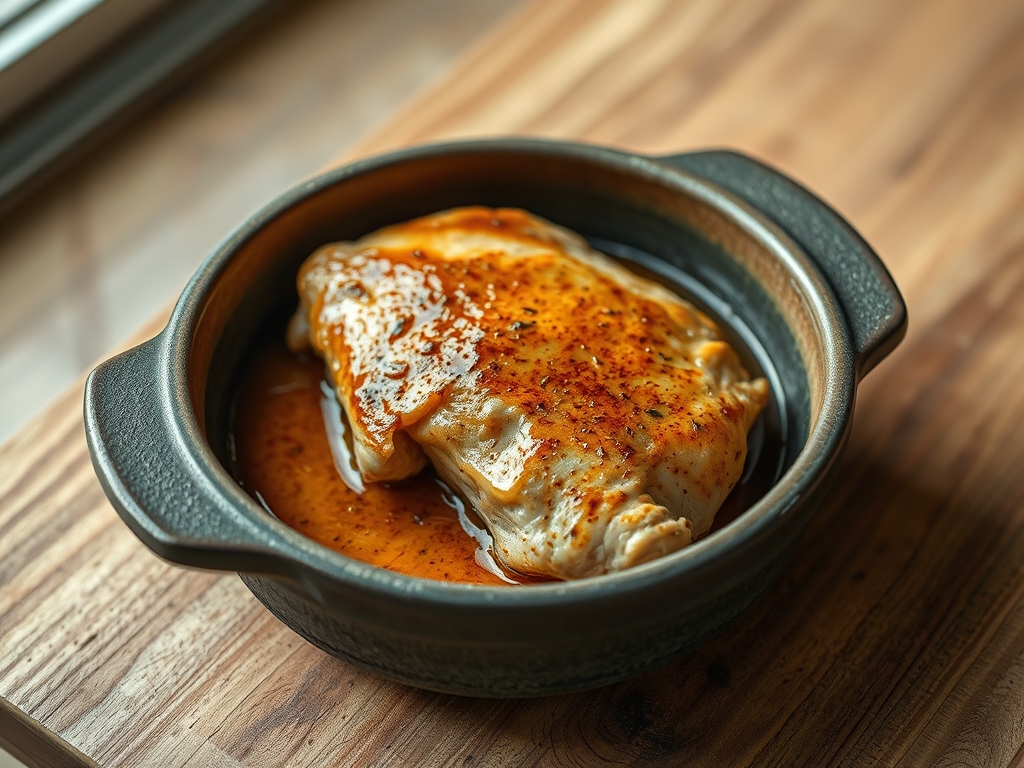
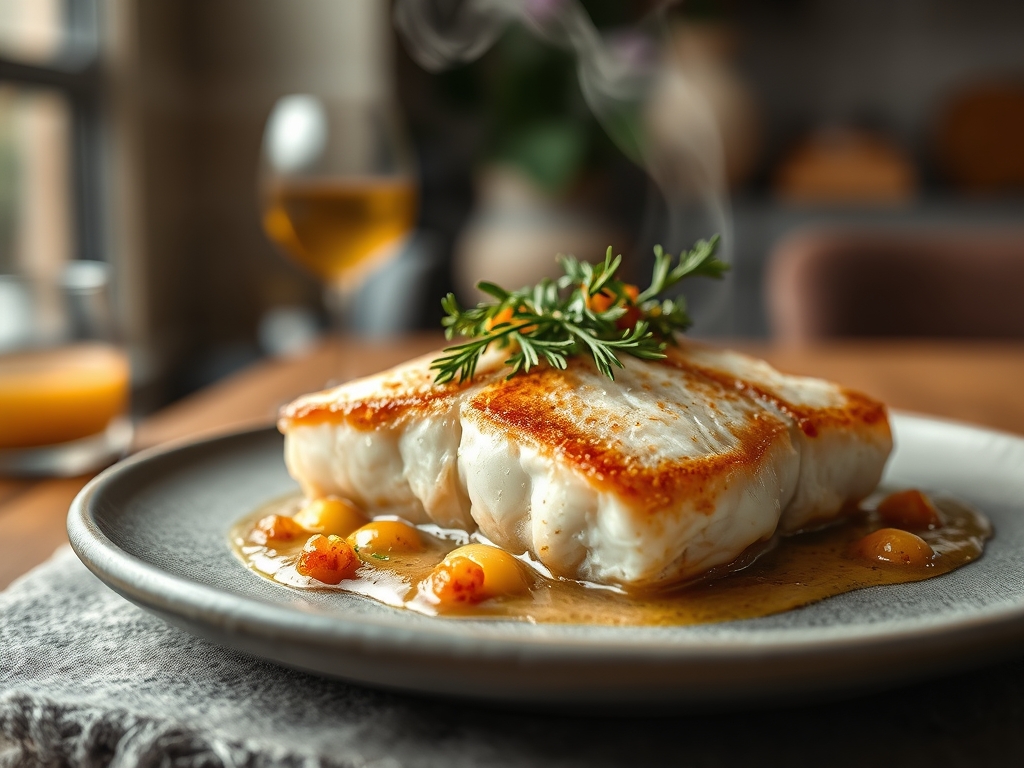
Forget everything you know about the aggressive, high-heat violence of the searing station. We are entering the realm of molecular gentleness. When you execute a perfect Poached Sea Bass, you are not just cooking; you are managing a delicate phase transition where proteins denature without the structural trauma of a Maillard reaction. Imagine a pristine fillet submerged in a liquid bath that is shimmying just below the boiling point. The goal is a texture so buttery it feels like a culinary secret. We are chasing that iridescent, pearlescent flake that only occurs when the internal temperature hits the sweet spot of 52 degrees Celsius. This is about precision. This is about the quiet power of convection. We are going to infuse this fish with a piquant aromatics profile that bypasses the crust and goes straight to the soul of the muscle fiber. If you want smoke and char, go to a barbecue. If you want technical perfection and a texture that dissolves like a dream, stay right here.
THE DATA MATRIX
| Metric | Specification |
|---|---|
| Prep Time | 20 Minutes |
| Execution Time | 15 Minutes |
| Yield | 4 Servings |
| Complexity | 4 / 10 |
| Estimated Cost per Serving | $14.50 |
THE GATHERS
Ingredient Protocol:
- 700g / 1.5 lbs Chilean or European Sea Bass (4 fillets, skinless)
- 500ml / 2 cups Fish Stock (High-quality, low sodium)
- 250ml / 1 cup Dry White Wine (Sauvignon Blanc or Pinot Grigio)
- 2 Large Shallots (Finely minced)
- 3 Garlic Cloves (Smashed and peeled)
- 15g / 1 tbsp Whole Black Peppercorns
- 2 Fresh Bay Leaves
- 5g / 1 tsp Sea Salt (Fine grain)
- 1 Lemon (Slices and juice)
- 30g / 2 tbsp Cold Unsalted Butter (Cubed for finishing)
- 10g / 1/4 cup Fresh Parsley (Chiffonade)
Section A: Ingredient Quality Audit:
The primary failure point in Poached Sea Bass is the structural integrity of the fish. If your bass feels "mushy" or smells "fishy" before it hits the pan, your infrastructure is compromised. Sub-par fish lacks the albumin tension required for a clean poach. Technical fix: If the fish is slightly older but still safe, perform a Quick Brine. Submerge the fillets in a 5 percent salt solution for 10 minutes. This tightens the protein network and seasons the interior. If your white wine is too sweet, it will caramelize and ruin the "clean" profile; ensure you are using a bone-dry varietal to maintain the acidic balance.
THE MASTERCLASS
1. Construct the Court-Bouillon
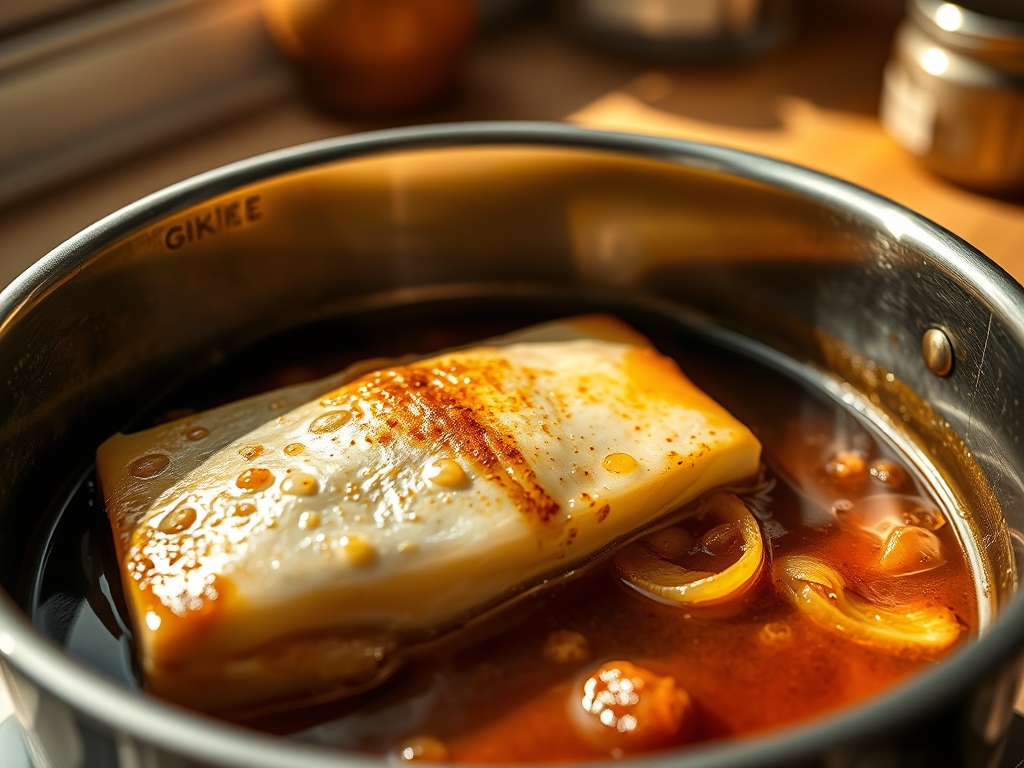
Place your saucier over medium heat. Combine the fish stock, white wine, shallots, garlic, peppercorns, bay leaves, and lemon slices. Bring the mixture to a simmer, then immediately drop the heat to the lowest setting. You want the liquid to "shiver," not boil.
Pro Tip: Use a digital scale to weigh your aromatics. Consistency in the poaching liquid ensures that the salt and acid levels do not overwhelm the delicate flavor of the bass. Boiling the liquid too hard will render out the delicate fats in the fish, leaving it dry.
2. Temperature Calibration
Before the fish enters the bath, use an instant-read thermometer to verify the liquid temperature is between 75 and 80 degrees Celsius (165 to 175 degrees Fahrenheit). This is the "Goldilocks Zone" for gentle denaturation.
Pro Tip: This is where your saucier excels over a standard pot. The flared sides allow for better evaporation control, which concentrates the poaching liquid into a viscous essence while the fish cooks.
3. The Submersion Phase
Gently lower the sea bass fillets into the liquid. They should be at least two-thirds submerged. If they are not, add a splash more stock. Cover the pan with a tight-fitting lid or a cartouche (a circle of parchment paper) to trap the steam.
Pro Tip: Use a bench scraper to lift the fillets from your prep board to the pan. This prevents the delicate flesh from tearing before it has a chance to set.
4. Monitoring the Flake
Poach for 8 to 10 minutes depending on the thickness. The fish is done when it reaches an internal temperature of 52 degrees Celsius (125 degrees Fahrenheit). It should be opaque and yield to gentle pressure.
Pro Tip: The science of "carry-over cooking" is vital here. Remove the fish when it is 2 degrees below your target. The residual heat will finish the job without over-tightening the proteins.
5. Emulsifying the Finishing Sauce
Remove the fish to a warm plate. Increase the heat in the saucier and reduce the liquid by half. Whisk in the cold butter cubes one by one to aerate the sauce and create a glossy emulsion. Strain through a fine-mesh sieve.
Pro Tip: This technique, known as monter au beurre, creates a velvety coating that clings to the fish. The cold temperature of the butter is essential to prevent the emulsion from breaking.
Section B: Prep & Timing Fault-Lines:
The most common human error is the "Thermal Spike." If you walk away and the liquid starts to boil, the fish will seize and become rubbery. Always keep a cup of room-temperature stock nearby. If the liquid starts to bubble aggressively, add the stock immediately to "crash" the temperature. Another fault-line is the "Resting Gap." If the fish sits too long without being covered, the surface will oxidize and turn a dull grey. Always plate and sauce immediately.
THE VISUAL SPECTRUM
Section C: Thermal & Visual Troubleshooting:
Look at the Masterclass photo. Notice the vibrant green of the herbs against the stark, clean white of the fish. If your fish looks "yellowed," your poaching liquid was likely over-reduced or your wine was too high in sugar. If the edges of the fish look ragged, your poaching liquid was too turbulent. The goal is a "clean break" when a fork is inserted. If the sauce looks broken or oily, you added the butter too fast or the liquid was too hot. To fix a broken sauce, add a teaspoon of heavy cream and whisk vigorously to re-emulsify.
THE DEEP DIVE
Macro Nutrition Profile:
A standard 175g serving provides approximately 35g of high-quality protein, 4g of healthy fats (mostly Omega-3s), and 0g of carbohydrates. This is a lean, nutrient-dense powerhouse.
Dietary Swaps:
- Vegan: Replace the sea bass with thick-cut "steaks" of King Oyster mushrooms or Cauliflower. Use vegetable stock and vegan butter.
- Keto: This recipe is naturally Keto-compliant. Ensure the wine is bone-dry.
- GF: Naturally gluten-free. Ensure your fish stock does not contain hidden wheat thickeners.
Meal Prep & Reheating Science:
Poached fish is notoriously difficult to reheat because the microwave destroys the delicate protein bonds. To maintain the molecular structure, reheat the fish "Low and Slow" in a 120 degree Celsius (250 degree Fahrenheit) oven, covered with a splash of leftover poaching liquid to provide steam.
THE KITCHEN TABLE
Can I use frozen Sea Bass?
Yes, but it must be fully thawed and patted dry. Frozen fish often has compromised cell walls; a quick salt brine is mandatory to help the fish hold its shape during the poaching process.
What if I don't have white wine?
Substitute with a 50/50 mix of verjuice or white wine vinegar and water. The acidity is crucial for balancing the fats in the sea bass and keeping the flesh bright white.
Why is my fish sticking to the pan?
You likely didn't use enough liquid or your pan isn't clean. Even in a poach, a thin layer of aromatics (like the shallots) on the bottom of the pan acts as a physical buffer between the metal and the fish.
How do I know the fish is fresh?
The "Nose Test" is king. Fresh sea bass should smell like a clean ocean breeze. If there is any hint of ammonia or "fishiness," the proteins have already begun to break down.